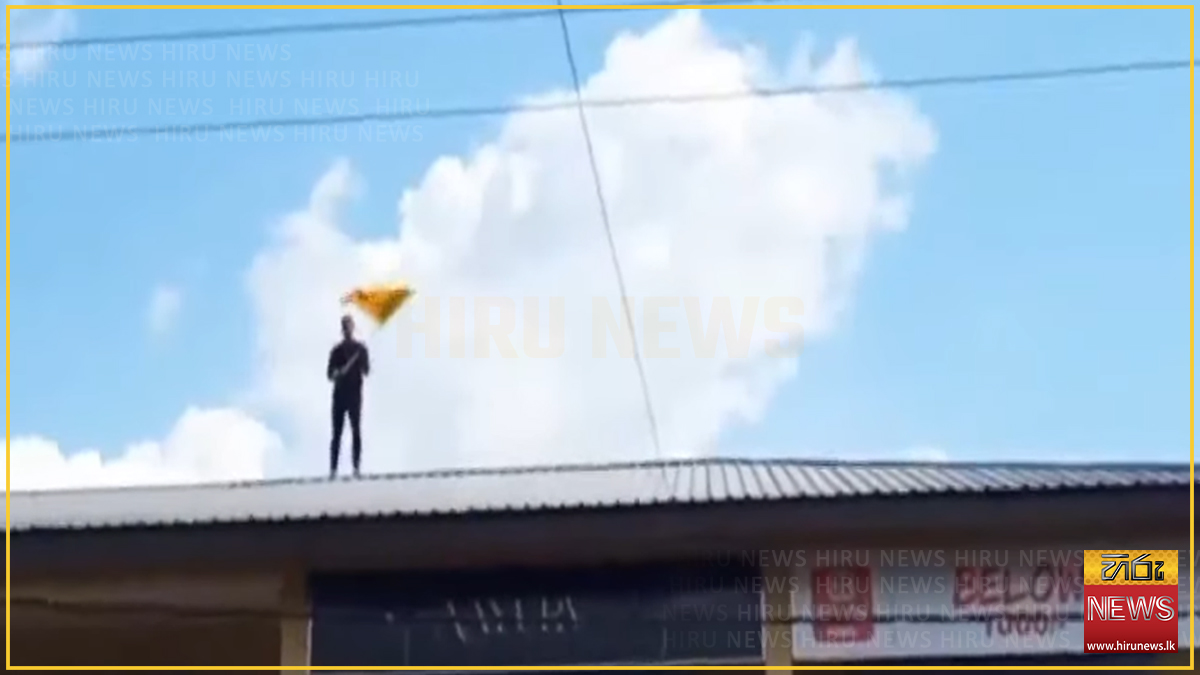
A protest by a farmer organisation representative on the roof of the new shopping complex in Hingurakgoda ran into a second day on Saturday, coinciding with President Anura Kumara Dissanayake’s visit to Polonnaruwa, Hiru News reported.
The demonstration was begun on Friday by S. Samaraweera, Secretary of the Abeypura branch of the Pulasthi Farmers’ Collective. He alleges that genuine farmers face injustice while the government organises public rallies with political supporters rather than delivering the facilities cultivators need.
Representatives of several other farmer organisations gathered at the site on Saturday in support. They said the government has still not established a guaranteed price for paddy.
A second farmer body presses the same point
At a press conference in Ampara the same day, Y. P. Ananda Jayaratne, Chairman of the Gal Oya Left Bank Farmers’ Organisation, urged the government to concentrate on releasing payments for paddy already purchased rather than holding public meetings.
The rally the protest was aimed at
Dissanayake was in Polonnaruwa on Saturday for an NPP farmers’ rally, where he said funds allocated to the Paddy Marketing Board will not be recalled to the General Treasury and that the Rs. 30,000 fertiliser subsidy continues into the Maha season.
The complaint about outstanding payments has a documented backdrop. The Paddy Marketing Board has bought 64,838 metric tonnes from farmers this Yala season, and the retention of its allocation announced on Saturday is aimed at keeping that purchasing capacity intact between harvests.
Not reported
Hiru does not say how long Samaraweera intends to remain on the roof, whether police or the local authority have intervened, or whether he has been offered a meeting with officials. No figure is given for how much the two organisations say is owed for paddy already delivered, or for how long payments have been outstanding. Neither the Ministry of Agriculture nor the Paddy Marketing Board is quoted in response, and no other verified newsroom had filed on the protest at the time of writing.