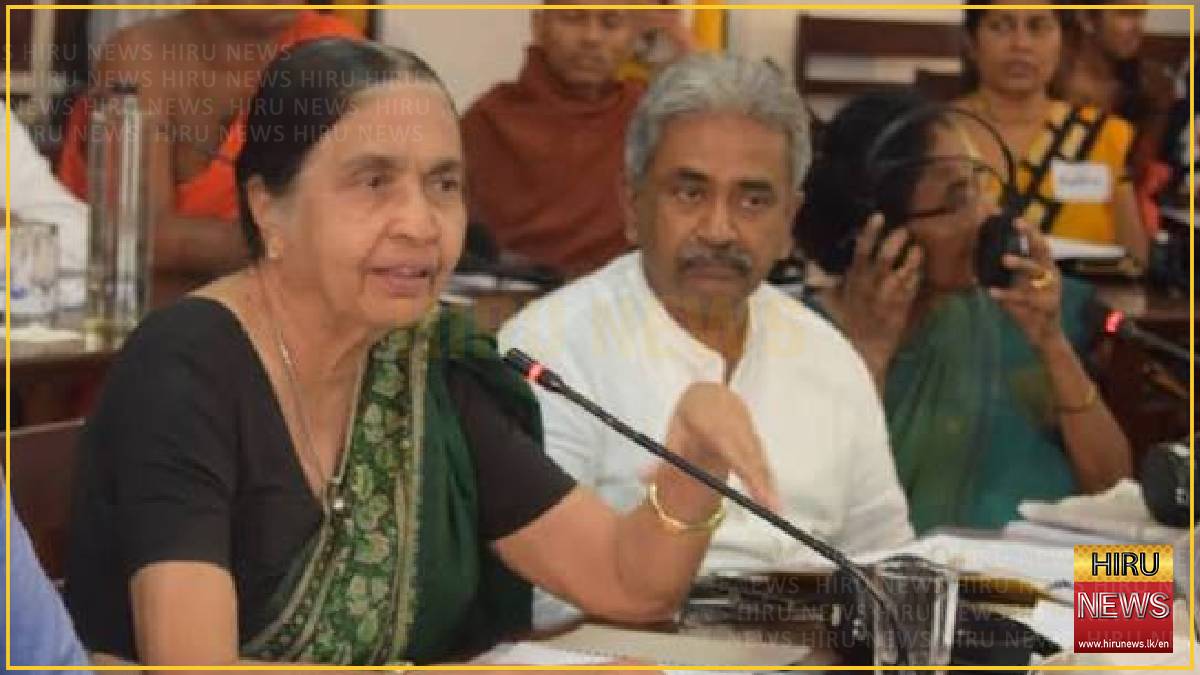
Sri Lanka needs a new Constitution that abolishes the Executive Presidency and puts a parliamentary system with the Prime Minister at its centre, Professor Savitri Goonesekere said at an event in Colombo, Hiru News reported.
The former Vice Chancellor of the University of Colombo said reform should aim at correcting the weaknesses in the country’s democratic system while strengthening the institutions that protect citizens’ rights.
Reform, not retreat from democracy
Her central argument was a warning against reading Sri Lanka’s democratic failures as a case against democracy itself.
“We must now recognise that even today, if we say there is a democratic deficit, our countries have used democracy to give a better quality of life to our people,” she said.
Goonesekere acknowledged that the country has seen serious failures and dysfunctional institutions, but said those should be answered through constitutional reform rather than a drift toward authoritarian government.
“The challenge is to build a new Constitution that addresses the gaps we have and ensures the well-being of our people. That should be the basis of drafting a new Constitution,” she said.
Holding the government to its manifesto
She placed the responsibility for pursuing reform on the National People’s Power government, noting that a new Constitution appeared in the NPP’s election manifesto and saying the government should be held to that commitment.
She also pushed back on a familiar framing in Sri Lankan constitutional debate — the idea that the country’s problems trace to a single founding error in the 1978 Constitution. “We must also challenge this often-repeated statement that we have a ‘78 curse,” she said, arguing the country has had deficiencies but has also had genuine democratic achievements.
The intervention lands while the government’s proposed 22nd Amendment is before the country, an amendment the SJB says weakens judicial independence and against which it has announced a Colombo protest for 24 September. Goonesekere’s argument runs in a different direction from that dispute: it is for replacing the 1978 framework outright rather than amending it.
Not reported
Hiru does not name the event, its organisers or venue, or say who else spoke. It does not report whether Goonesekere set out any mechanism or timetable for drafting a new Constitution, whether she addressed the 22nd Amendment specifically, or what she proposed should replace the President’s executive functions beyond a parliamentary system centred on the Prime Minister. There is no response from the government.
This report is single-source. A search of the Daily Mirror, NewsFirst, the Island, Daily FT, Colombo Gazette and EconomyNext found no other outlet carrying the remarks; Ada Derana was unreachable behind a CloudFront block.