Yemen’s internationally recognised government has said its forces will return to the fight after losing the country’s entire Red Sea coastline to the Houthis in a matter of days, while states around the Red Sea begin absorbing the economic consequences of Houthi control over the Bab al-Mandeb strait.
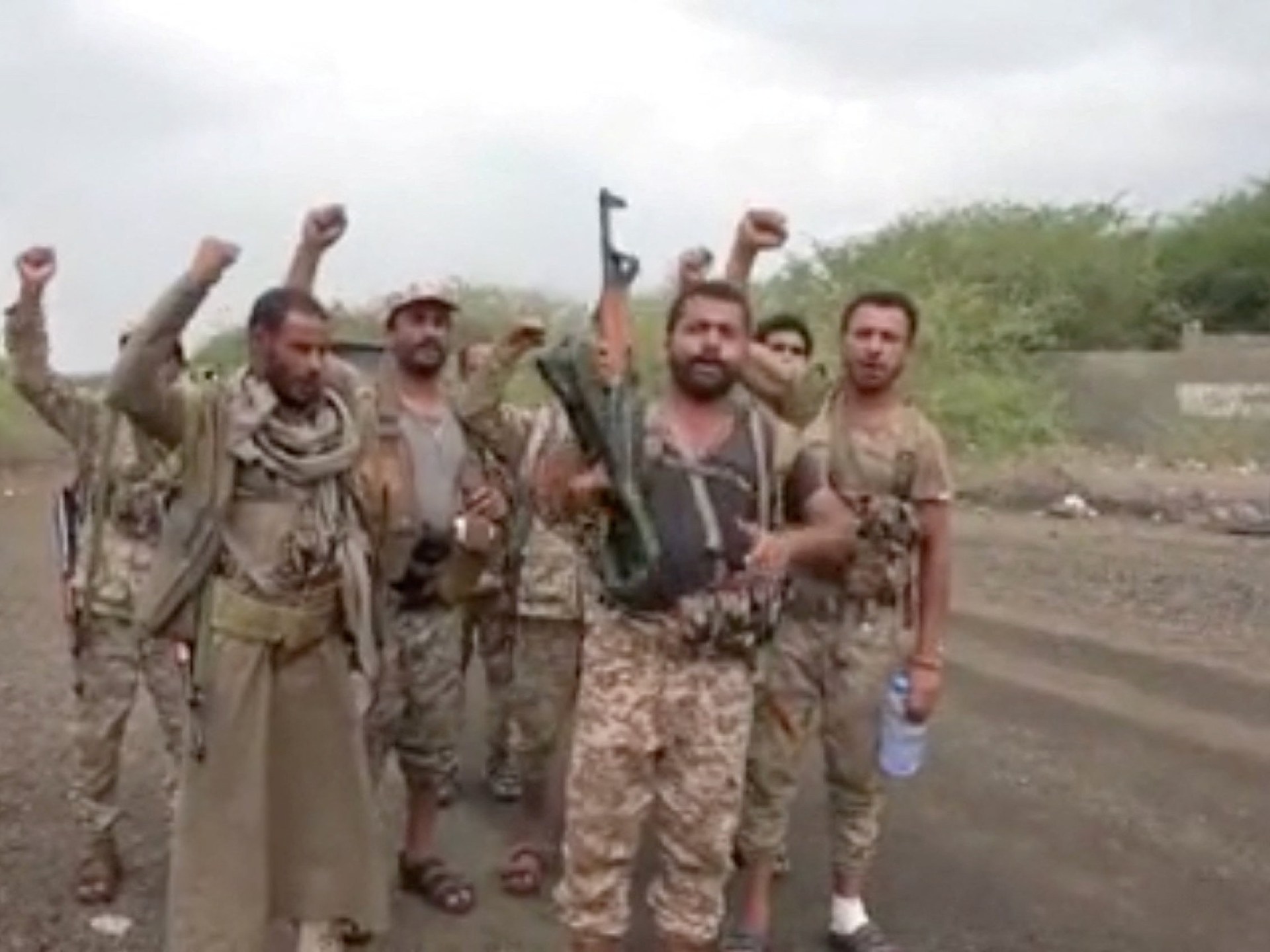
Sultan al-Arada, a member of the ruling presidential council and governor of central Marib province, described the collapse of government forces in the port city of Mocha and elsewhere on the west coast as “painful and regrettable”, Hiru News reported. In a television interview, he said government fighters “are currently regrouping and will return to the battle in one form or another”.
The National Resistance — commanded by Tariq Saleh, a nephew of Yemen’s late leader Ali Abdullah Saleh — separately said it would “continue its struggle within the ranks of the armed forces … [until] Yemen is liberated from Iran’s proxies”. It was the withdrawal of Saleh’s forces that opened the way into Mocha.
The statements are the first substantive account from the government side of a retreat that handed the Houthis Perim Island and the strait within 36 hours. They do not explain whether the withdrawal was ordered, negotiated or a rout.
”Absolutely a turning point”
Adam Baron, a fellow with the Future Security Program at the New America think-tank, told Al Jazeera in remarks carried by Hiru News that the takeover is “absolutely a turning point”.
“This constitutes the loss of some of the most strategically important real estate in all of Yemen,” he said. “When it comes to Yemen’s strategic location, you can’t beat as a military group having access to Bab al-Mandeb.”
Baron suggested the retreat without much of a fight could be a tactic “for the fight to come”, but said Saudi-led air strikes alone were unlikely to dislodge the Houthis and that a unified ground force would be needed. He placed the advance in a wider frame: “Since the launch of the US-Israeli war on Iran six months ago, we’re dealing with a situation where we have a multi-front series of interconnected conflicts ebbing and flowing in their inflammation across the region.”
Saudi Arabia and the government have fought the Houthis for 12 years.
The blame game in Washington and Riyadh
A senior Yemeni source attached to the government’s military forces told CNN that pleas for air cover began mid-morning on Thursday as the Houthis committed “waves upon waves of fighters … along with their available ballistic missiles and weapons”. The source said US Central Command assured him Saudi air support was coming.
“But the air support never came,” the source said. “And Mocha has now fallen.”
Amr Al-Bidh, the top official of Yemen’s Southern Transitional Council, told CNN the Houthis now hold the strait cheaply: “They don’t need to use advanced weapons to close Bab al-Mandeb. They can just use a cannon on a car. It’s a leverage that they have without using advanced weapons. And they will keep it.”
What the strait carries
Bab al-Mandeb handles roughly 12 per cent of global trade, including 11 per cent of seaborne oil and 8 per cent of liquefied natural gas, Al Jazeera reported. Houthi positions now sit about 20km from the African coast.
Traffic was already far below normal. Shipping volume and tonnage through the Red Sea fell 50–55 per cent between 2023 and 2025 as carriers rerouted around the Cape of Good Hope, adding more than 20 days to transit times and raising global freight costs.
Egypt has borne the fiscal cost: it lost about US$7 billion in Suez Canal revenue across 2023–24, around 60 per cent of the canal’s takings. Cairo has nonetheless kept to a policy of non-intervention in Yemen.
Djibouti received more than 2,000 Yemeni refugees in 24 hours and is supplying food and water. Eritrea, Al Jazeera reported, is positioning itself to use its Red Sea location to break out of international isolation.
Houthi politburo member Hazem al-Assad has repeated that “freedom of navigation … are safe” — the same formula the group used after taking Perim, and one that still excludes Saudi-linked vessels under the blockade it declared in July.
Why it matters in Colombo
Sri Lanka’s exposure runs through freight and fuel. A longer Cape routing lifts costs on the Colombo–Europe trade, and with Iran holding Hormuz at the other end of the Arabian peninsula, both of the region’s main oil corridors are now under Iran-aligned control. Brent broke US$100 a barrel on 9 September and has stayed above it. The Ceylon Petroleum Corporation said on Friday that pump prices will not move for now, while private distributors are pressing for a return to cost-reflective pricing.
Not reported
No source gives a current daily transit figure for Bab al-Mandeb or reports a named carrier changing its routing since Perim fell. Neither al-Arada nor the National Resistance says where government forces have regrouped, in what strength, or on what timetable. Saudi Arabia has not responded publicly to the CNN account of the missing air cover, and CENTCOM has not commented. No figure is given for total Yemeni displacement into Djibouti beyond the 24-hour count.
Sources
- Yemen’s government vows to fight back after Houthi seizures — Hiru News, September 13
- Red Sea nations watch as Houthis seize Bab al-Mandeb strait — Al Jazeera, September 13
- Houthis’ rapid gains in Yemen ‘absolutely a turning point’ in regional war — Hiru News, September 13
- Blame game begins after Iran-backed Houthis’ lightning advance down Red Sea coast — CNN, September 12