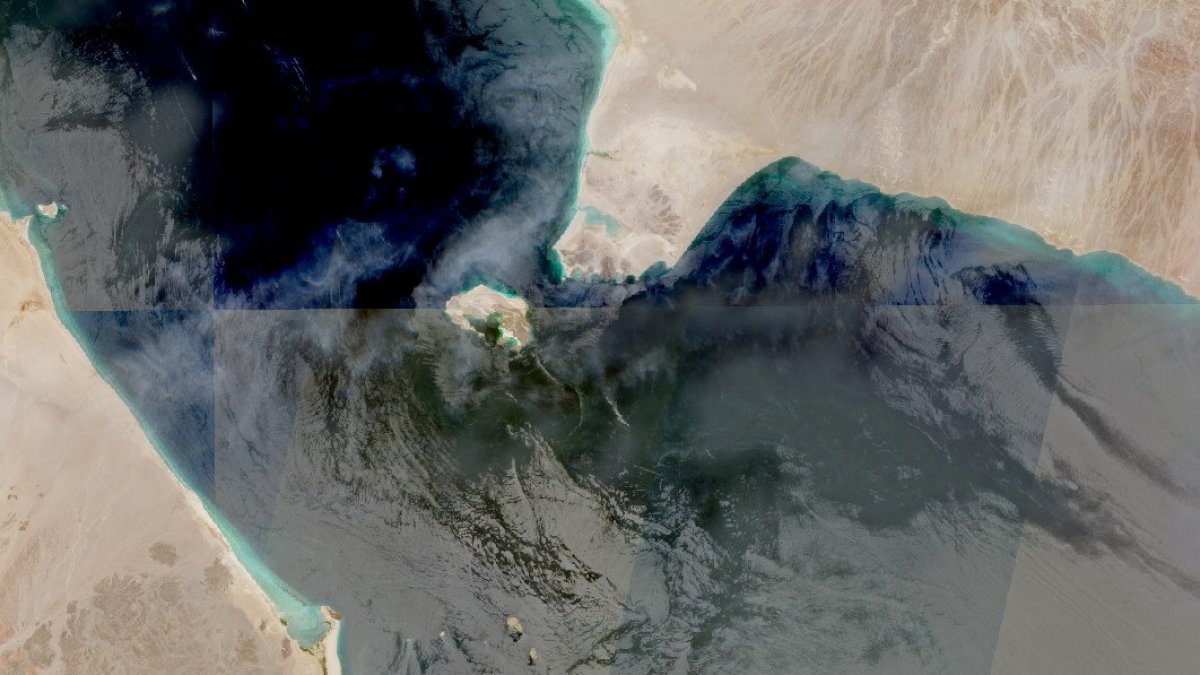
Yemen’s Iran-aligned Houthi forces have seized Perim Island — also known as Mayyun — at the narrowest point of the Bab al-Mandeb strait, completing their takeover of one of the world’s principal maritime chokepoints.
Boats carrying Houthi fighters reached the island after pro-government forces loyal to Yemen’s internationally recognised administration withdrew, Al Jazeera reported. The Sanaa-based Yemen Press Agency said Houthi forces took the al-Omari camp, which overlooks the strait.
The advance follows Thursday’s capture of the port city of Mocha, after which fighters moved offshore to seize nearby islands. Saudi Arabia responded with air strikes on Houthi positions including Mocha airport, Hiru News reported, though Al Jazeera said it could not immediately verify damage or casualties.
Why the island matters
Perim sits in the middle of the strait, dividing it into two shipping channels that connect the Red Sea to the Gulf of Aden. Holding it means holding the passage.
This answers the question left open when Houthi forces reached Mocha on Thursday: government troops had relocated south to Dhubab, opposite Perim, and military sources quoted by Reuters said control of the town and the island was key to holding the strait. It has now changed hands.
With Iran having blocked the Strait of Hormuz, Iran-aligned forces are now positioned at chokepoints at both ends of the Arabian peninsula.
The exposure is greatest for Saudi Arabia
With Hormuz effectively closed, the world’s largest oil exporter has leaned on the Red Sea corridor, using pipeline infrastructure across the kingdom to bypass the eastern bottleneck. Bab al-Mandeb is the southern exit from that corridor.
Houthi military representatives said further operations would follow. They repeated that general commercial shipping remains safe with the exception of Saudi vessels — the targeted blockade declared in July rather than a closure of the route. Houthi official Hazem al-Assad put it more broadly, saying: “Freedom of navigation and international trade in the Red Sea and Bab al-Mandab are safe and orderly.”
Neither statement explains how Saudi-linked vessels would be identified in practice, and no shipping line has been reported changing its routing.
What it means for Sri Lanka
Pressure on this route lengthens voyages around the Cape and raises freight and insurance costs on the Colombo–Europe trade, feeding directly into fuel import costs.
Oil closed above US$100 a barrel for the first time since mid-May, Al Jazeera reported, with US diesel passing $6 a gallon. That is a further increment on Thursday’s session, when Brent closed at $107.63 and US diesel stood at $5.98. Sri Lanka has already seen the effect transmit to local markets through the Brent crossing of $100 on 9 September and a third consecutive fall on the Colombo Stock Exchange.
The bind for Washington
Update, September 12: A Reuters analysis carried by Hiru News sets out why the advance is a problem for US President Donald Trump seven months into the war with Iran. By reaching Perim, the Houthis gained the ability to choke off Bab el-Mandeb just as Saudi Arabia has been shipping much of its oil from Red Sea ports — handing Tehran potential leverage over both of the region’s main oil-shipping corridors.
The timing is difficult for Trump, who is contending with record-low approval ratings and had recently announced an economic pressure campaign intended to force concessions from Iran. High US petrol prices driven by the conflict have put the Republican Party’s control of Congress at risk in the November midterm elections, and Iran has remained defiant despite military and economic damage.
“Just weeks ago, Trump adopted a strategy of squeezing Iran’s economy while keeping military conflict at levels too low to squeeze the American economy,” said Stephen Wertheim, a senior fellow at the Carnegie Endowment for International Peace. “The Houthis have shattered Trump’s plan.”
Separately, Iran and Gulf states are due to meet in Oman on Monday, where no signed agreement on Hormuz is expected.
Humanitarian toll
UN agencies report that the surge in fighting has displaced more than 46,000 people in the past week, Hiru News said, citing Reuters and The Guardian.
That figure is far above the roughly 20,000 the International Organization for Migration was reported to have counted a day earlier, and the casualty figures circulating for this offensive have not reconciled between outlets at any point.
Still not reported
Neither source gives a figure for Bab al-Mandeb’s current daily transit volume, reports any carrier rerouting, or carries a Saudi or UN response to the fall of Perim itself. Neither gives casualties from the Saudi strikes on Mocha airport, and neither states how many fighters were involved or whether the withdrawal of government forces was negotiated.