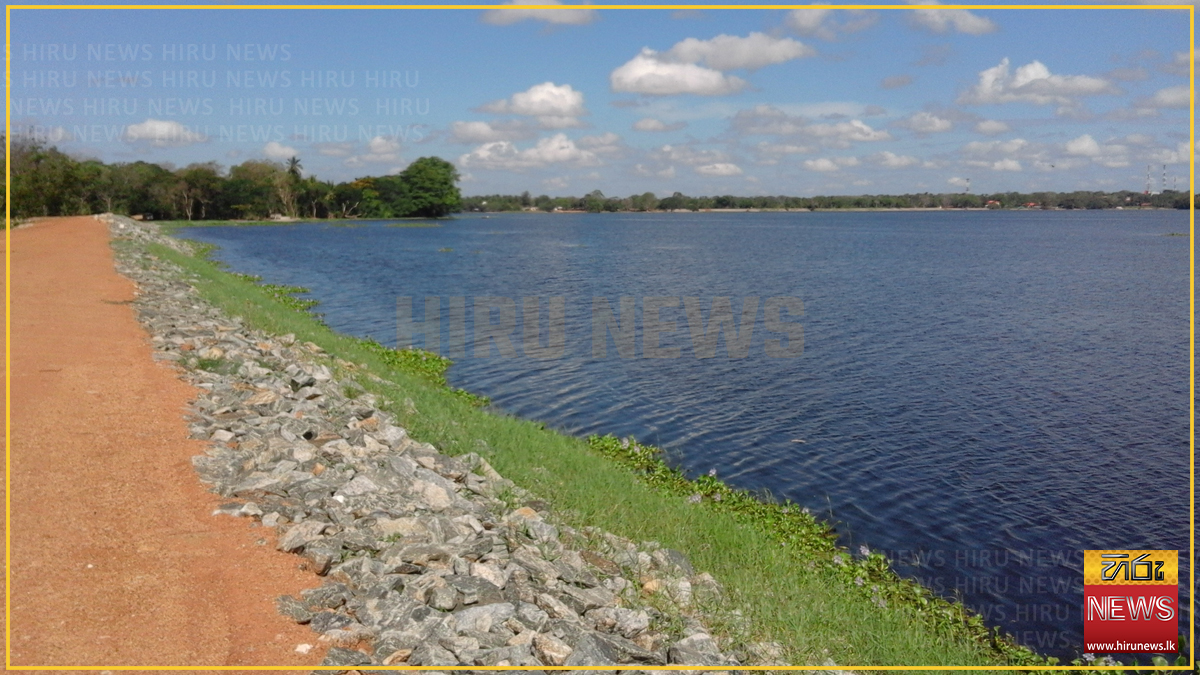
The Cabinet has approved continuing a project to survey and physically demarcate the boundaries of major tanks managed by the Department of Irrigation, at a total cost of Rs. 400 million over 2025 to 2028, Hiru News reported on Tuesday.
The programme runs under the Clean Sri Lanka initiative and is intended to protect water sources from encroachment by changing land use around the reservoirs.
What has been done so far
Cabinet originally approved the project on 16 June 2025 with Rs. 100 million allocated to the Ministry of Agriculture, Livestock, Land and Irrigation.
Work began in 2025 on 21 selected tanks. Demarcation and the installation of boundary posts were completed that year at three of them — Nuwarawewa, Kantalewewa and Tissawewa.
The full project as approved by the Department of National Planning covers 48 tanks. The remaining work is to be completed over the next few years.
On those figures, three of 48 tanks were finished in the first year on a Rs. 100 million allocation, and the remaining 45 are to be completed by 2028 on the balance of a Rs. 400 million budget.
What the money buys
The scope includes surveying the remaining tanks, fabricating and installing boundary stones, and planting trees along the tank reserves.
The proposal to continue the work through the Department of Irrigation was submitted by the Minister of Agriculture, Livestock, Land and Irrigation.
Why boundaries matter here
An unmarked tank reserve is difficult to defend against encroachment, and encroachment on a reservoir’s catchment and bund reduces the water it can hold. Sri Lanka’s dry-zone irrigation network is under acute pressure this season: the Environment Ministry counts more than 160,000 people affected by drought across eight districts, and NewsFirst reported last week that 487 of roughly 800 tanks in Moneragala district had dried up, with several major reservoirs below 30 per cent of capacity.
Nuwarawewa and Tissawewa are both in Anuradhapura district and Kantalewewa is in Trincomalee — all in the dry zone the drought has hit hardest. Hiru News does not connect the demarcation programme to the drought.
Not reported
Hiru News does not name the 21 tanks selected for the first phase or the 48 in the full programme, say how much of the Rs. 400 million has been spent, or give a target date for completion beyond “the next few years” and the 2025–2028 window. It does not say how much encroachment has been identified, whether any enforcement follows demarcation, or what happens to people already occupying tank reserve land. No other verified newsroom reachable from here had filed on the decision at the time of writing.
Sources: Hiru News.