The European Union-funded CIRCULAR project is awarding three grants totalling €110,000 to Sri Lankan university research teams studying how to cut single-use plastics out of food value chains in the Colombo and Galle districts, EconomyNext reported.
The money goes to teams at the Faculty of Agriculture, University of Ruhuna, and the Faculty of Medicine and Faculty of Computing at the University of Kelaniya — a deliberately mixed set of disciplines for a problem that is at once agricultural, medical and computational.
The gap the research is meant to close
The EU Delegation in Sri Lanka framed the grants around a data problem rather than an awareness one. Existing figures on plastic waste in Sri Lanka, it said, do not break down far enough by sector, source and type of plastic. Without that detail, policymakers and businesses cannot identify where plastic use can realistically be cut, or judge which interventions would deliver results.
The three teams will examine the use, flow and impacts of single-use plastics across selected food and beverage value chains in the two districts, combining data collection, waste-flow mapping, environmental and public health assessments and life-cycle analysis.
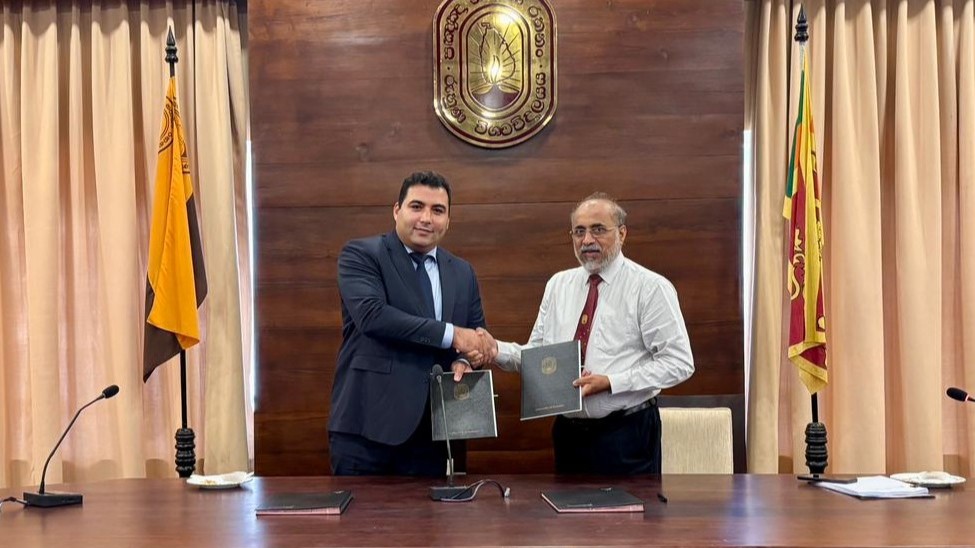
“Through our research grant programme, we aim to generate evidence that can contribute to better policy, planning and decision-making, while also strengthening collaboration between researchers, policymakers and practitioners,” said Mahmoud Gaballah, CIRCULAR Project Manager at Expertise France. The grant agreement was signed with Senior Professor Pasdunkorale Arachchige Jayantha, Vice-Chancellor of the University of Ruhuna.
What CIRCULAR is
CIRCULAR — Circular Economy in the Food Sector — is a three-year programme targeting both food loss and waste and single-use plastic waste in Sri Lanka’s food sector. It is funded by the EU with partial co-funding from Germany’s Federal Ministry for Economic Cooperation and Development (BMZ), and implemented jointly by Expertise France, the Food and Agriculture Organization and GIZ.
Alongside the research, the project runs awareness and behaviour-change work aimed at shifting the sector away from what EconomyNext describes as the traditional “take, make and dispose” model.
Context
The grants arrive against a domestic policy record on plastics that has been more prohibitive than analytical. Sri Lanka has banned plastic water bottles in state institutions, issued repeated CEA warnings on polythene at Vesak, and seen the Supreme Court take up a petition on the shopping bag tax and the environmental fund. The Health Ministry has separately warned about BPA and microplastics. What has been missing is the evidence base the EU says these grants are meant to build.
Expertise France is an established implementing partner here, having run EU programmes on green finance taxonomy and eco-industrial parks.
Not reported
EconomyNext does not say how the €110,000 splits across the three teams, when the research begins or ends, or how the teams were selected. It does not name the lead researchers, identify which food and beverage value chains were chosen, or say why Colombo and Galle in particular. Nor does it state whether the findings will be published openly, or which government agency — the Central Environmental Authority, the Ministry of Environment or another — is expected to act on them.
No other verified newsroom had filed on the grants at the time of writing; the story was picked up only by aggregator sites, which are not cited here.