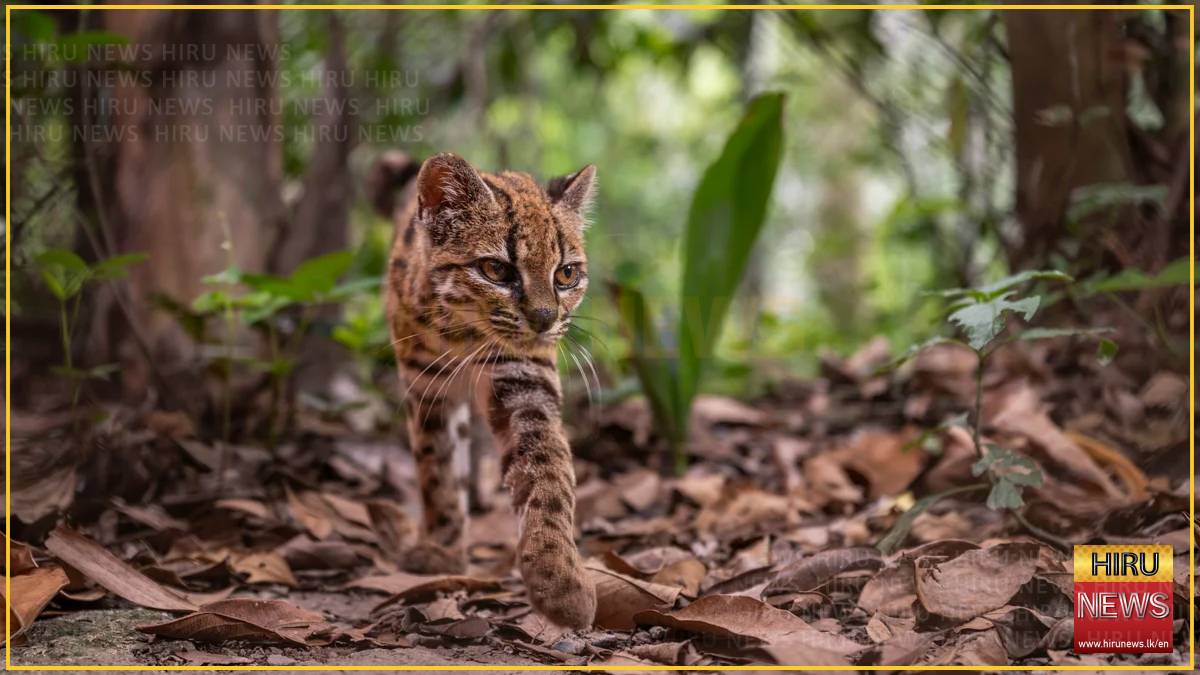
A small spotted cat from the cloud forests of Bolivia has been confirmed as a species new to science — the first new wild cat identified in roughly a century.
Leopardus tilcayo, the tilcayo tiger cat, is slender, spotted and round-eared, and smaller than a typical house cat. It lives in the Bolivian Yungas, where the Andes meet the Amazon basin. The species was described on Thursday in the journal Current Biology.
It was hiding in plain sight
The cat escaped notice because it was repeatedly confused with other small wild cats carrying similar spots and stripes — animals that even specialists struggle to tell apart. DNA work showed it to be in a class of its own.
“It’s an amazing result that we have a new species for the world, which is the Leopardus tilcayo,” said Paola Nogales-Ascarrunz of the Universidad Mayor de San Andrés in La Paz, who co-authored the study and leads a Bolivian wild cat conservation programme. “It’s amazing that there are still new species waiting to be discovered: we don’t have to go to a volcano, an island, or deep into the sea.”
Only one confirmed member of the species is known — a cat living in a Bolivian rescue sanctuary — though researchers believe others exist in the wild.
The cat that started it
That single animal, a 10-year-old nicknamed ‘Tigrino’, is what set the work in motion.
It had been found in the forest by a local resident who took it for a domestic kitten. As it grew, it became clear it did not behave like a house cat. Nogales-Ascarrunz noticed it looked unusual while volunteering at the sanctuary, and recalled hearing of other sightings of small wild cats in the Yungas that no scientist had followed up.
She assembled an international team to reconstruct the family history of tiger cats using DNA from living animals and museum specimens.
“There’s so few records or pictures, no individual in a museum, so it was hiding because nobody was looking,” said Eduardo Eizirik, a conservation geneticist at the Pontifical Catholic University of Rio Grande do Sul in Brazil.
The count of the world’s cats goes up
The study produced a second finding: there appear to be five tiger cat species rather than three.
Combined with the new description, that pushes the recognised total for the family Felidae — which covers every living cat from house pets to tigers — from an official 41 species to 44 or more.
Tiger cats are found from Costa Rica through to Bolivia and Argentina, and receive far less attention than lions, leopards and tigers. They are considered vulnerable to extinction through deforestation, habitat loss and illegal hunting — but the new species is absent from previous conservation assessments, having not been recognised when they were made.
“It is impossible to protect a species if we don’t know what it is or where it lives,” said Dr Caroline Sartor of the Wildlife Conservation Research Unit at the University of Oxford, a co-researcher. “These are animals similar in size to a domestic cat, so you might think we would know them all by now, but this discovery shows how much biodiversity is still to be uncovered in some of the less-studied regions of the world.”
Attribution and open questions
The Daily Mirror carries this as a credited BBC report; Hiru News carries a separate international wire account of the same study. Both agree on the species name, the journal and the Yungas location.
Neither report gives an estimate of how many tilcayo tiger cats may survive in the wild, the extent of their range within the Yungas, or whether a formal conservation assessment will now follow. Neither says how Tigrino came to be at the sanctuary or what happens to the animal now, and neither lists the other four tiger cat species the study recognises.