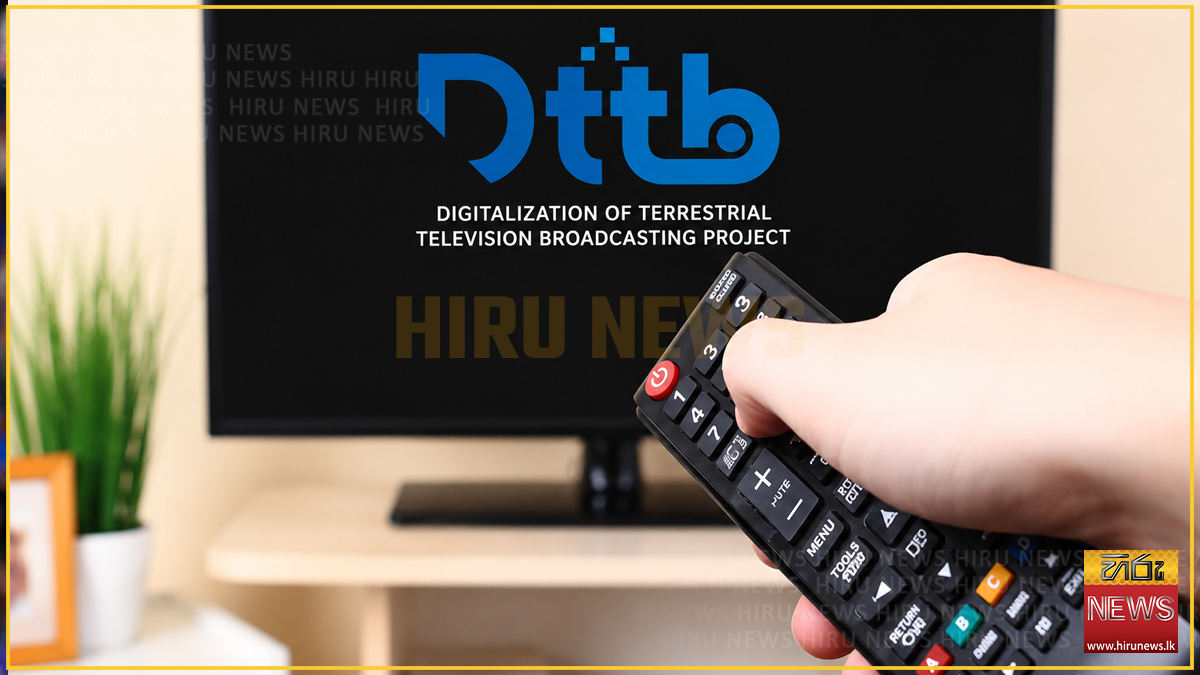
Sri Lanka held the launch ceremony for its Digitalisation of Terrestrial Television Broadcasting (DTTB) project at the Lotus Tower in Colombo on Monday, under the theme “The Next Wave of Television”. Full broadcast operations under the project are to begin in December 2028.
Health and Media Minister Dr Nalinda Jayatissa said the system aims to provide fair access across both the state and private television sectors while safeguarding media freedom, and that implementation would deliver clearer picture quality for viewers alongside upgraded telecommunications infrastructure, Hiru News reported.
Jayatissa thanked the Japanese Embassy for its support and described the launch as a milestone reached after a wait of 10 to 12 years.
Japanese Ambassador Akio Isomata addressed the ceremony, noting Japan’s long-term support for the initiative and acknowledging the national economic losses caused by past delays to the project.
Deputy Minister of Digital Economy Eranga Weeraratne spoke on integrating DTTB with 4G and 5G networks, and DTTB Project Director Engineer Prasanga Rajapaksha set out operational strategies and future timelines. Science and Technology Minister Prof. Krishantha Abeysena and Deputy Minister of Mass Media Dr Kaushalya Ariyarathne also attended, with welcoming remarks by Mass Media Ministry Secretary Dr Anil Jasinghe.
What this launch is, and is not
The DTTB project has been marked by a series of announcements over several years, and headlines alone do not distinguish between them. An earlier inauguration of the project was held in June 2025 at the Ministry of Mass Media, and a separate engineering consultancy agreement was signed before that. Monday’s event is a distinct stage: a launch ceremony at the Lotus Tower, which is to serve as the network’s main transmission site, with a named date for the start of full operations.
Readers should treat the December 2028 date as the operative one. Neither the ministers’ remarks as reported nor the project’s own branding indicates that digital terrestrial broadcasting begins for viewers now; what began on Monday is the build-out phase toward that 2028 target. Hiru gives no figure for the project’s cost, no detail on the Japanese financing terms, and no information on what equipment households will need or whether analogue transmission continues in parallel until 2028.
Hiru’s report is the only account of the ceremony LankaNewz could verify; its English and Sinhala filings carry the same content.