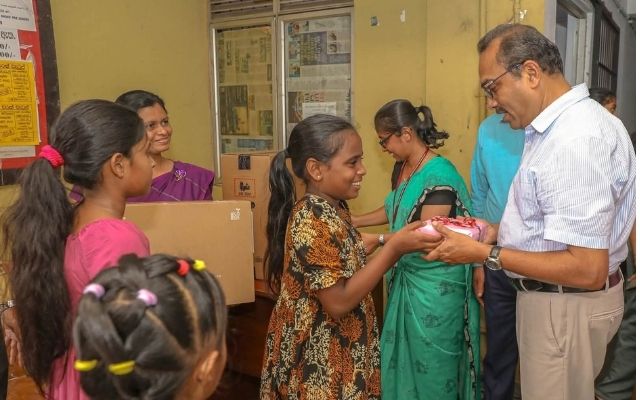
Digital technology will be built into the teaching-learning process, school administration and the teacher transfer mechanism, and policies will be drawn up to keep students safe in the digital space, Deputy Minister of Education and Higher Education Dr. Madhura Seneviratne has said.
He made the remarks on 29 September at the foundation-laying ceremony for a new building at Kirimatiyana Buddhist Girls’ National School, the Daily Mirror reported.
Including the teacher transfer mechanism is the detail that distinguishes this from a general pledge to digitise classrooms. Teacher transfers are among the most contested administrative processes in Sri Lankan state education, and moving them onto a digital system is an administrative reform rather than a teaching one.
The building
The new structure at Kirimatiyana is a three-storey block costing Rs. 180 million, comprising three modern Advanced Level science laboratories and six classrooms. It is expected to be finished within 10 months.
The wider reform programme
Seneviratne said the government’s aim was to create school learning environments aligned with emerging global education trends, in order to produce “future-ready professionals and innovators.” Under the new education reforms, 169 primary schools were selected in 2026 to be developed in line with those trends.
He said funds had also been allocated to promote educational equity through a fairer distribution of resources between urban and rural schools — the gap that determines whether a reform announced in Colombo reaches a school like Kirimatiyana at all.
On curriculum, the Deputy Minister said vocational education subjects would be incorporated into the Advanced Level curriculum, alongside new subjects aimed at developing students’ innovative skills.
Context
The student-safety commitment lands in the same week that Prime Minister Harini Amarasuriya, in her World Children’s Day message, said the government was working on safeguards for children’s use of social media and digital devices, and weeks after the Ministry of Women and Child Affairs warned parents about posting children’s photographs online.
The Daily Mirror report does not say when the digital systems are expected to be in place, what the student-safety policies will contain, who will draft them, or how the 169 primary schools were chosen. No cost is given for the digitisation programme itself, as distinct from the Kirimatiyana building.