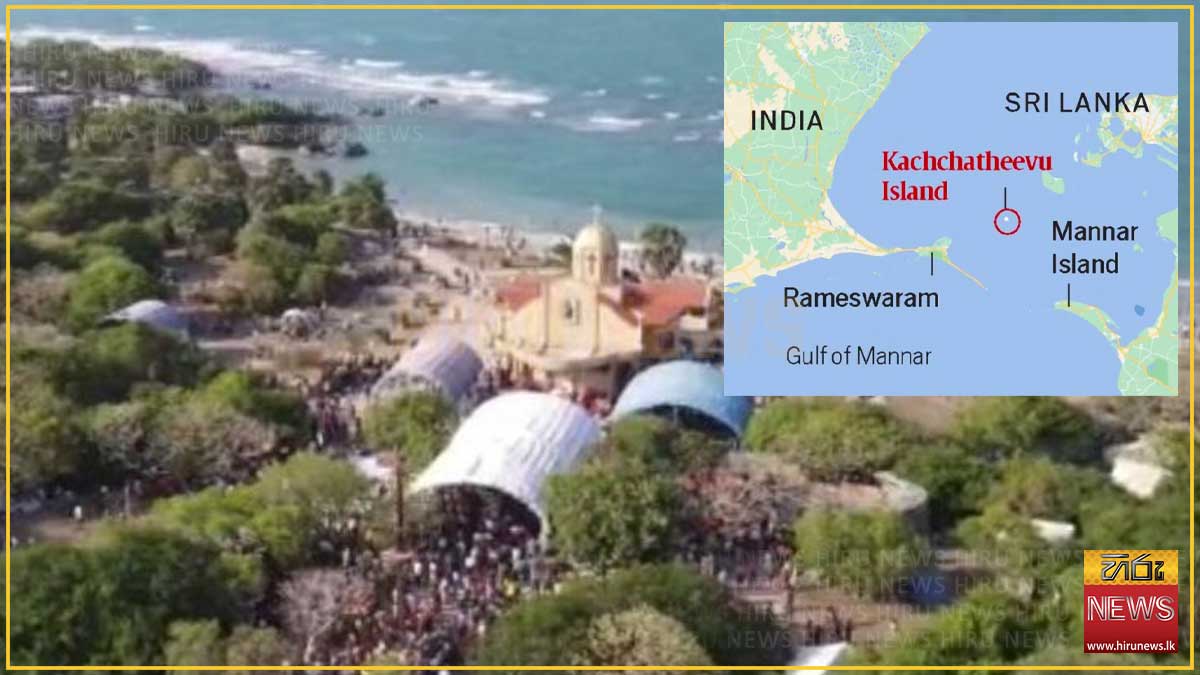
The Foreign Ministry has told Iranian authorities that Sri Lanka will refrain from supplying food, water and medicine to the crews of about 20 Iranian vessels stranded off the island, and has advised the private sector not to supply them either.
The position is reported by the Daily Mirror in a report by Kelum Bandara, which describes the government as caught between its obligations at sea and its exposure to United States secondary sanctions.
The vessels are in Sri Lanka’s Exclusive Economic Zone but not in its territorial waters — a distinction that matters for what the state is required to do and what it may choose to do.
Iran’s case, and the instruments it cites
Iranian authorities have taken the position that Sri Lanka, as a member state, is obligated to assist the crews of ships waiting for provisions. They cite three instruments:
- the United Nations Convention on the Law of the Sea (UNCLOS)
- the International Convention for the Safety of Life at Sea, 1974 (SOLAS)
- the International Convention on Maritime Search and Rescue, 1979 (SAR Convention)
The Daily Mirror’s own characterisation of Article 98 of UNCLOS is that Sri Lanka is “legally entitled” to render such assistance to ships in humanitarian need. That framing — a permission — and Iran’s framing of the same body of law — a duty — are the two sides of the dispute as the filing presents them. This desk takes no position on which reading is correct, and no Sri Lankan legal opinion is quoted in the report.
Why the government says it cannot
The reason given is economic. Sri Lanka, described in the filing as a small country with a fragile economy, cannot resist American sanctions at this juncture because the United States is its single largest export destination, absorbing about 23 percent of Sri Lanka’s merchandise exports.
Former External Affairs Minister Prof. G.L. Peiris said Sri Lanka could not resist sanctions, but could raise its non-aligned policy collectively with other countries rather than attempting it alone.
The report also restates the US Embassy’s position, which this desk reported on 5 October: a spokesman said the United States is working with allies and partners to close off avenues for “illicit Iranian revenue,” and pointed to a 25 September press release stating that Washington has previously designated brokers, fuel suppliers and cargo certifiers for facilitating sanctioned vessels, and that providing fuel, food or provisions can expose companies and individuals to sanctions risk including civil or criminal penalties.
What is new here
Most of the surrounding facts have been reported before. Two things in Thursday’s filing have not.
A formal communication to Tehran. Earlier accounts described what the government had not done. On 4 October Foreign Minister Vijitha Herath said that “as a government, we have not transported goods or provided supplies to those sanctioned vessels” — a statement of past conduct. Thursday’s report says the Foreign Ministry has informed the Iranian authorities that Sri Lanka will refrain from supplying them. That is a stated future position, communicated to the other government.
An advisory to private firms. Herath’s formulation on 4 October was that private companies “carry the responsibility to understand the prevailing situation and act responsibly” — a statement about where liability falls. Thursday’s report goes further: the ministry has advised the private sector not to supply the vessels. An advisory is a different act from a disclaimer of responsibility.
Read against the government’s assurance that no decision detrimental to the country would be taken and its repeated description of its stance as neutral and non-aligned, the filing describes a position that has hardened in practice.
The thread so far
The anchorage was first reported by this desk on 2 October, when service providers withdrew rather than risk secondary sanctions, leaving around 20 Iran-flagged tankers without supplies. The Foreign Ministry then said the US measures announced on 24 August were a global policy rather than a directive aimed at Sri Lanka. On 4 October Herath denied that Washington had pressured Colombo at all, putting about 19 Iranian vessels among roughly 47 ships of all flags outside the territorial limit and attributing their presence largely to navigation difficulties arising from the situation in the Strait of Hormuz.
Thursday’s count of “around 20” is consistent with those earlier figures.
Not reported
The filing does not say when the Foreign Ministry communicated its position to Iran, in what form, or who delivered it. It does not say how the advisory to the private sector was issued, to whom, or whether it carries any legal force. It does not report any Iranian response to the communication.
It gives no account of the condition of the crews, how long they have been without resupply, how many people are aboard the vessels, or whether any has been resupplied from another source. It does not say whether the government has sought an exemption or licence from the US Treasury’s Office of Foreign Assets Control, or whether the question of a humanitarian carve-out has been raised with Washington at all. No serving official is quoted — the only named figure is a former minister. Neither the Iranian embassy nor the US Embassy is quoted responding to the decision itself.
No other verified newsroom had filed on this account at the time of writing.