Montana Governor Greg Gianforte will arrive in Sri Lanka on Friday, 9 October, with First Lady Susan Gianforte and an official state delegation, for a visit aimed at agricultural trade and security cooperation, the US Embassy in Colombo said.
The announcement was reported by NewsFirst and by the Daily Mirror, both citing the embassy statement.
Pulses are the commercial objective
Montana is the largest US producer of pulses — chickpeas, lentils and dry peas — and is seeking new export channels for its growers. The delegation is to meet Sri Lankan pulse importers and traders to examine market openings and build longer-term commercial relationships.
Pulses are a staple of the Sri Lankan diet and are largely imported, which makes the sector an unusually direct fit for a US state whose agricultural output is concentrated in exactly those crops.
A military track travels with the trade delegation
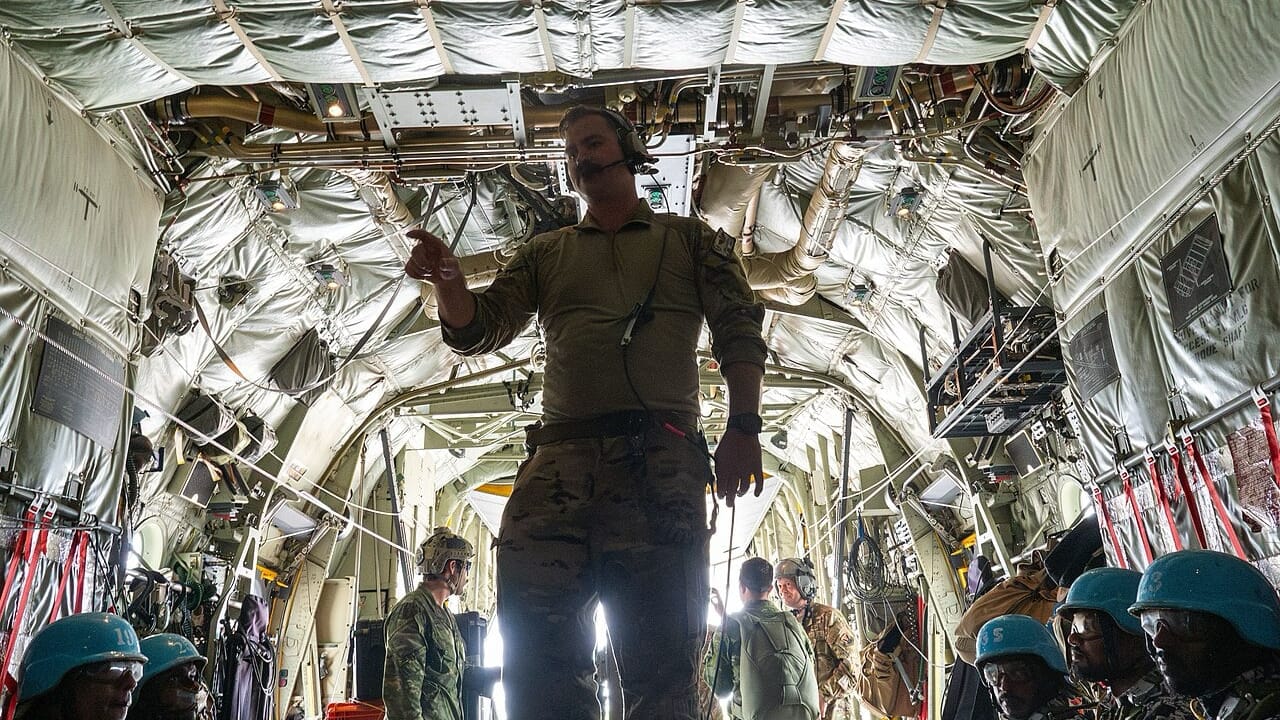
Brigadier General Trenton Gibson, Montana’s Adjutant General and Commander of the Montana National Guard, is accompanying the Governor to advance the State Partnership Program, which has paired Montana with Sri Lanka since 2021.
The embassy statement also pointed to a Memorandum of Understanding signed in 2025 between the Montana National Guard and Sri Lanka’s Ministry of Defence, formalising cooperation in disaster response, maritime domain awareness and professional military education.
The visit reverses an earlier trip
The relationship has been running in the other direction for some time. In April, a Sri Lankan delegation led by Ambassador Mahinda Samarasinghe travelled to the Montana Security and Economic Summit at Gianforte’s own invitation, holding talks on critical minerals, port security and disaster preparedness. The partnership has since produced a joint disaster-response exercise and National Guard cooperation on disaster management.
Update, 10 October: three ministerial meetings, and the agenda widens past pulses
The Governor held talks with Sri Lankan government representatives on 9 October, the final day of the mission, NewsFirst reported. The subjects went well beyond the pulse exports the embassy had trailed, taking in trade, industry, critical minerals and defence.
He met three ministers:
- Deputy Minister of Industry and Entrepreneurship Development Chathuranga Abeysinghe, on advanced manufacturing, investment, and cooperation in Sri Lanka’s vein graphite industry
- Deputy Minister of Defence Major General Aruna Jayasekara, on the Montana National Guard partnership — disaster-response training, maritime and air security, port resilience, and further cooperation with the US Coast Guard
- Minister of Trade, Commerce, Food Security and Co-operative Development Wasantha Samarasinghe, on markets for Montana’s agricultural producers and potential partnerships in industrial hemp and Sri Lanka’s textile and apparel sector
Vein graphite is the detail worth marking. Sri Lanka holds the world’s only commercially mined deposits of the high-purity form, and it sits squarely in the critical-minerals category the United States has been working to source outside China — which makes it a strategic interest rather than an agricultural one.
Gianforte expressed condolences for the lives lost during Cyclone Ditwah and commended Sri Lanka’s response to the disaster. The Sri Lanka leg was part of a wider trade mission that also took in India.
Update, 11 October: the Governor’s own account adds a US ambassador and a dollar figure
Montana’s state government has published its own account of the 9 October meetings. It is the authoritative primary for this visit, and it carries several details absent from the Sri Lankan reporting. It is linked here rather than listed as a source because news.mt.gov is not a newsroom.
A US ambassador was in the room. US Ambassador to Sri Lanka Eric Meyer welcomed the delegation to the country and then joined the ministerial meetings — a fact no Sri Lankan filing mentions. It reframes the talks from a visiting state governor’s trade call into something closer to a joint US mission engagement. Meyer took up his post in Colombo earlier this year.
The graphite interest has an institution behind it. The Governor pointed to Montana Technological University’s expertise in mining engineering, geology, metallurgy, mineral processing, environmental engineering and mine safety, and the discussion with Deputy Minister Abeysinghe covered connecting that expertise to Sri Lanka’s vein graphite — specifically mine safety, mineral research, processing and value-added development. That is a narrower and more concrete agenda than “cooperation in the vein graphite industry”.
The scale of what Montana is selling. Agriculture is a US$6.22 billion industry in Montana, and the state is the United States’ leading producer of peas, lentils and chickpeas. This is the first figure attached to the commercial side of the visit in any account.
The defence meeting had a fourth participant. Montana’s Adjutant General, Brigadier General Trent Gibson, took part in the talks with Deputy Minister Jayasekara alongside the Governor and Ambassador Meyer. The release sets out the State Partnership Program’s working areas since 2021 as disaster response, engineering, aviation, maritime security and interoperability, and names Atlas Angel II as the most recent joint activity.
On hemp, the release is more specific than the Sri Lankan reporting: Montana is building out fibre production, which is the end of the hemp industry that would pair with Sri Lanka’s textile and apparel sector.
Gianforte is quoted twice. “Montana and Sri Lanka have built a strong relationship through our National Guard partnership, and we’re working to build on that foundation in ways that benefit both of our people,” he said. On the defence track: “The Montana National Guard helped build the bridge between Montana and Sri Lanka. Now we have an opportunity to strengthen that partnership while opening new doors for our farmers, businesses, universities, and industries.”
Update, 12 October: the Daily Mirror names the objective as closing a deficit
The Daily Mirror, writing up the Governor’s own release four days after the visit, frames the mission as a US attempt to narrow a trade balance that currently runs in Sri Lanka’s favour — describing it as a “strategic mission” sent to explore exporting food items and to strengthen cooperation in critical minerals and defence.
That is a purpose none of the earlier accounts stated. The US Embassy trailed the visit as an agricultural and security engagement, the Sri Lankan filings reported the ministerial meetings, and the Montana release set out the agenda — but none characterised the mission as deficit reduction. The paper attributes the reading to itself rather than to any US or Sri Lankan official, and gives no trade figure for the gap it describes.
Not reported
No filing gives the value of current Montana–Sri Lanka pulse trade, and the Daily Mirror does not quantify the trade gap it says the mission was sent to narrow. Notably, the Governor’s own release also reports no agreement, memorandum or letter of intent signed during the visit, which makes the absence more telling than it was when only the Sri Lankan accounts were available — a state trade mission that concluded without a signed instrument.
Neither the Sri Lankan reporting nor the Montana release carries any direct quotation from the three Sri Lankan ministers, and no statement has been issued by the Sri Lankan government. No account says whether the pulse importers and traders the embassy named were in fact met.
The two accounts also differ on the Adjutant General’s name — the embassy statement gave Trenton Gibson, the Montana release gives Trent Gibson. This desk has not established which form is correct.
Two previously listed items — which ministers the Governor would meet, and whether an agreement was signed — have since been answered, and are set out in the updates above.