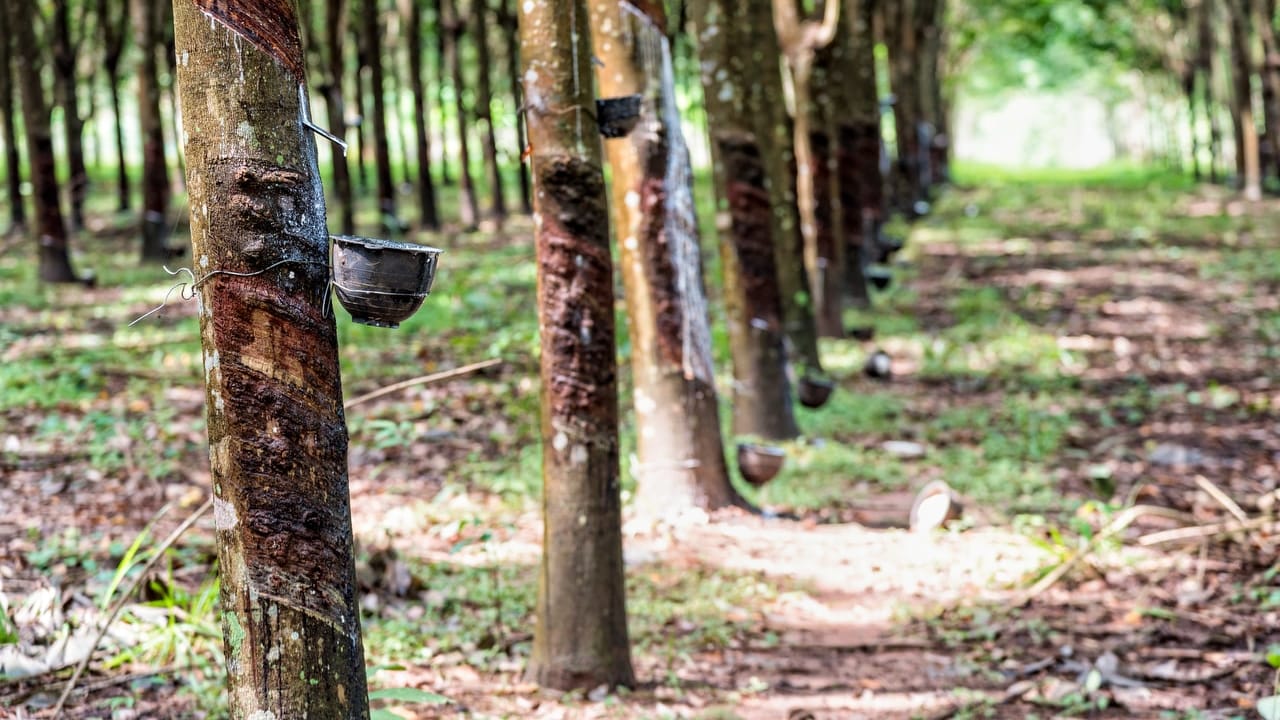
The Colombo Rubber Traders’ Association has used the 150th anniversary of commercial rubber cultivation in Sri Lanka to press the government for an early extension of the land leases held by Regional Plantation Companies, arguing that uncertainty over agreements that expire in 2045 is already holding back replanting and estate modernisation.
“This anniversary must be more than a celebration of our past. It must serve as a renewed commitment to revitalizing the industry, addressing the challenges confronting our stakeholders and securing a commercially sustainable, competitive and prosperous future for Sri Lankan natural rubber,” CRTA chairman Harin de Silva said in the association’s anniversary statement, reported by EconomyNext and the Daily Mirror.
Clearer terms on long-term tenure would encourage plantation companies to replace ageing trees, lift yields and upgrade infrastructure, the association said. Without that certainty, it argued, their willingness to commit to long-term investment could be affected. The Daily Mirror notes pointedly that the CRTA “gave no proposed lease duration or estimate of the investment at stake.”
The bottlenecks it names
The association lists stagnant or declining productivity in traditional growing areas, ageing rubber trees, rising production costs, labour constraints, insufficient replanting, limited use of rain guards — which allow tapping to continue in wet weather — and underused land that could be brought back into production. Smallholders, it said, need support to keep rubber an economically attractive livelihood.
It also urged Sri Lanka to assess whether rubber can be grown in suitable drier areas outside the traditional wet zone, subject to climate and land-use assessment and the development of planting material suited to those conditions — a move it framed as reducing the crop’s geographic concentration.
On market access, the CRTA flagged the EU Deforestation Regulation and its traceability and geo-location requirements, calling for coordinated data collection and technical assistance so growers and processors can document the origin of supplies without undermining their commercial viability. This desk reported on an industry workshop on the same regulation in October.
The anniversary being marked
The industry dates from the arrival of Hevea brasiliensis seedlings at the Henarathgoda Botanical Gardens in Gampaha in 1876. The Rubber Research Institute of Sri Lanka, founded in 1909, is described as the world’s oldest rubber research institute, and the Weekly Colombo Rubber Auction has run for more than 116 years. The CRTA also cites the 1952 Rubber-Rice Pact with China as a defining chapter.
The association set out five priorities: productivity and replanting; the economic viability of smallholders and plantations; research, innovation and value addition; supply-chain transparency and regulatory readiness; and international competitiveness. It pointed to Sri Lanka’s position as what it called “the world’s solid tire manufacturing capital”, alongside surgical gloves and latex bedding, as the base for more value-added manufacturing.
Not reported
Neither filing gives a production tonnage, an export earnings figure or a replanting rate. That gap persists from the Planters’ Association’s own 150-year statement in October, which this desk noted at the time did not give an output figure either. Two anniversary statements from two industry bodies have now passed without one.