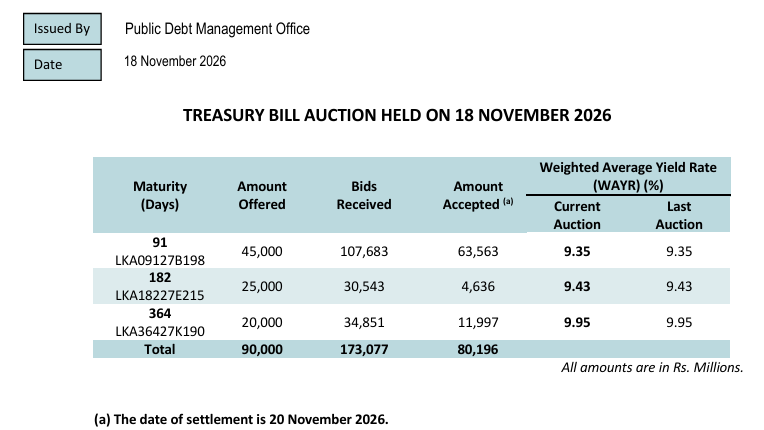
Sri Lanka’s Treasury bill yields were unchanged at Wednesday’s auction, and the government sold Rs 80.2 billion of the Rs 90 billion on offer. The shortfall was not for lack of demand: bids totalled Rs 173.1 billion, almost twice the amount offered.
EconomyNext reported the result under the headline “less bills sold”. The bid figures come from the Public Debt Management Office’s (PDMO) own results table, which EconomyNext published with its report. They show the shortfall was the debt office’s choice.
| Maturity | Offered | Bids received | Accepted | Yield |
|---|---|---|---|---|
| 91 days | Rs 45.0bn | Rs 107.7bn | Rs 63.6bn | 9.35% |
| 182 days | Rs 25.0bn | Rs 30.5bn | Rs 4.6bn | 9.43% |
| 364 days | Rs 20.0bn | Rs 34.9bn | Rs 12.0bn | 9.95% |
| Total | Rs 90.0bn | Rs 173.1bn | Rs 80.2bn |
All three yields were the same as at the previous auction. The bills settle on 20 November.
Where the bids went unaccepted
The PDMO took more three-month paper than it offered: Rs 63.6 billion against Rs 45 billion. It accepted only 15 percent of the bids for six-month bills and about a third of those for 12-month bills.
The table does not show the rates at which the rejected bids were made. Selling less than offered while yields stay unchanged is consistent with the office declining bids at higher rates. The PDMO has not said so, and EconomyNext’s report does not address it.
The six- and 12-month bills remain available on tap, EconomyNext said.
Context
The auction had been announced at Rs 90 billion a day earlier. Brokers have also described the equity market as waiting for the Central Bank’s next monetary policy announcement, though those reports did not give its date.
A note on sourcing: this report rests on EconomyNext’s filing and on the PDMO results table EconomyNext published.