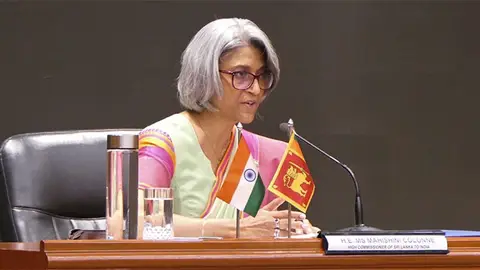
Wars fought far from Sri Lanka can reach ordinary households through higher fuel prices, disrupted shipping and economic pressure, Sri Lanka’s High Commissioner to India, Mahishini Colonne, has warned, saying the Indian Ocean can no longer be treated as a region insulated from conflicts elsewhere, NewsFirst reported on Thursday (26 November).
What she said
Colonne named the Strait of Hormuz, Bab el-Mandeb and the Strait of Malacca as chokepoints whose disruption could trigger consequences far beyond the conflict zone. “Energy prices rise. Shipping and insurance costs climb. Supply chains break,” she said, according to NewsFirst.
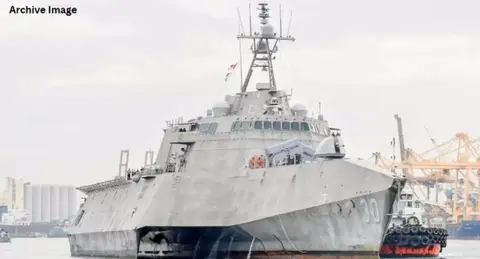
The report ties her warning to the sinking of an Iranian frigate off Galle in March, as the ship returned from a naval exercise hosted by India during the widening West Asia conflict. It says the Sri Lanka Navy answered the distress call before dawn and rescued 32 sailors. Colonne said Sri Lanka acted under its obligations under international law to rescue people in distress at sea, and noted that within weeks households across the country felt the conflict through fuel prices.
She argued that maritime security can no longer be handled apart from trade, economic stability and national prosperity. India and Sri Lanka, whose geography and reliance on the Indian Ocean place their interests close together, should bring the two into one framework, she said. “The next phase of India-Sri Lanka relations must treat maritime security and maritime commerce as parts of the same strategic equation.”
Background
In August, Colonne told an Indian defence college that ties must deepen without ceding sovereignty.
Not reported: NewsFirst’s text does not say where or when she spoke, or who organised the event. The frigate details are NewsFirst’s own account rather than a quoted statement by Colonne, and the report does not name the ship.
Sourcing: one verified newsroom, NewsFirst. A search of Sri Lankan newsrooms on 26 November found no other report of these remarks.