A new civil society voice has questioned the government’s move to award Sri Lanka’s proposed digital identity card project to an Indian company despite President Anura Kumara Dissanayake’s earlier objections to foreign involvement when he was in Opposition.
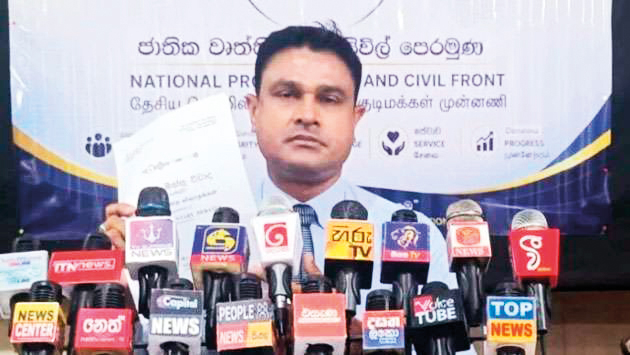
National Trade Union and Civil Front Convener Specialist Dr. Chamal Sanjeewa told a media briefing in Colombo on Wednesday that the project involved the collection of highly sensitive personal data — fingerprints, iris scans and other biometric details — and warned that transferring such information to an external entity posed serious national security and privacy risks.
“The world today runs on data,” Dr. Sanjeewa said, recalling statements President Dissanayake himself had made in Parliament when he was in the Opposition, expressing serious reservations over foreign involvement in the digital identity card initiative and warning of the dangers of surrendering citizens’ data to outside parties.
Dr. Sanjeewa alleged that the current administration was now proceeding with the same project and taking steps to award the contract to a selected Indian company. He further asked whether the tender had been awarded to a firm previously linked to controversial transactions and alleged tax-related irregularities in Sri Lanka, claiming that investigative reports had identified the company as a “questionable” entity.
He argued that data trafficking had emerged as one of the most lucrative illegal industries globally and stressed that any misuse of biometric data could have irreversible consequences for national security. Sri Lanka, he added, had sufficient technical expertise to implement the project independently through local professionals and institutions.
Putting the overall project value at more than Rs. 40 billion, Dr. Sanjeewa urged the government to make an official statement clarifying the tender process, the identity of the selected company and the safeguards in place to protect citizens’ personal data.
The intervention is the second civil society push-back this month after the Jana Aragalaya Movement / FSP raised the alarm on May 1 over a blacklisted Indian firm being added to the bidder list. It also follows the Digital Economy Minister Eranga Weeraratne’s denial of any e-passport tender award — a separate identity-document procurement track — and reports of a fake digital ID website used to defraud applicants. The government has not publicly responded to Wednesday’s allegations.
Source: The Island.