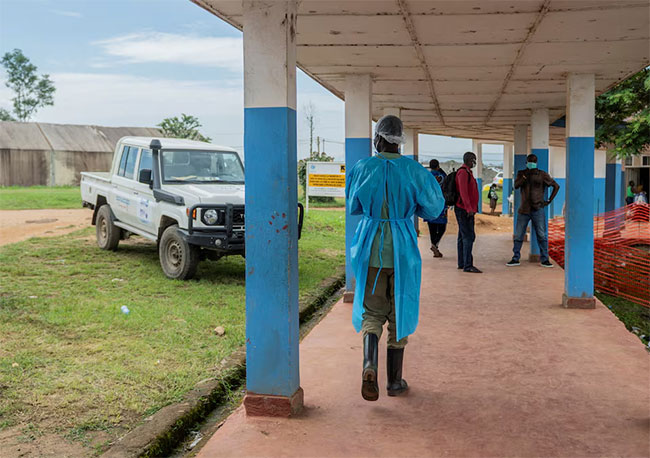
A case of Ebola has been confirmed in eastern Democratic Republic of Congo’s South Kivu province, hundreds of kilometres from the outbreak’s epicentre, the rebel alliance that controls the area announced on Thursday.
The case, in a rural area near the provincial capital Bukavu, signals the geographic spread of an outbreak that experts believe circulated undetected for around two months in Ituri province, several hundred kilometres to the north, before being identified last week.
The outbreak has now resulted in 160 suspected deaths out of 670 suspected cases, with 61 confirmed, according to DRC health ministry data published Thursday. Two cases have been confirmed in neighbouring Uganda, which said it would suspend flights to the DRC within 48 hours as a precautionary measure.
The Alliance Fleuve Congo, which includes the Rwanda-backed M23 rebels who seized swathes of eastern DRC last year, said the 28-year-old patient in South Kivu had died and been buried safely. The individual had travelled from the northern city of Kisangani; no further movements were disclosed.
South Kivu health spokesperson Claude Bahizire told Reuters two suspected cases had been detected in the province, including the fatal case. A second case was confirmed last week in Goma, capital of neighbouring North Kivu province, which is also under M23 control.
In Rwampara, an outbreak hotspot in Ituri, clashes broke out Thursday after the family of an Ebola victim disputed that the disease had killed him. Protesters set fire to tents run by medical charity ALIMA, prompting police to fire warning shots and tear gas.
The dynamic echoes the 2018-2020 outbreak, when hundreds of health centres were attacked by armed groups and civilians during the second-deadliest Ebola epidemic on record. First responders expect widespread violence across eastern DRC and renewed community mistrust to again complicate containment.
Jane Halton, chair of the Coalition for Epidemic Preparedness Innovations (CEPI), told reporters in Geneva that confirmed cases likely represent “the top of the iceberg.” CEPI is assessing vaccine candidates against the Bundibugyo strain.
Britain on Thursday committed up to 20 million pounds (USD 27 million) to the response. The United States has committed USD 23 million so far and pledged to help open up to 50 clinics in DRC and Uganda.
The geographic escalation builds on the WHO Public Health Emergency of International Concern declared over the weekend. The Bundibugyo strain has no approved vaccine, and WHO has warned development would take at least nine months. India on Thursday postponed the Fourth India-Africa Forum Summit citing the outbreak.