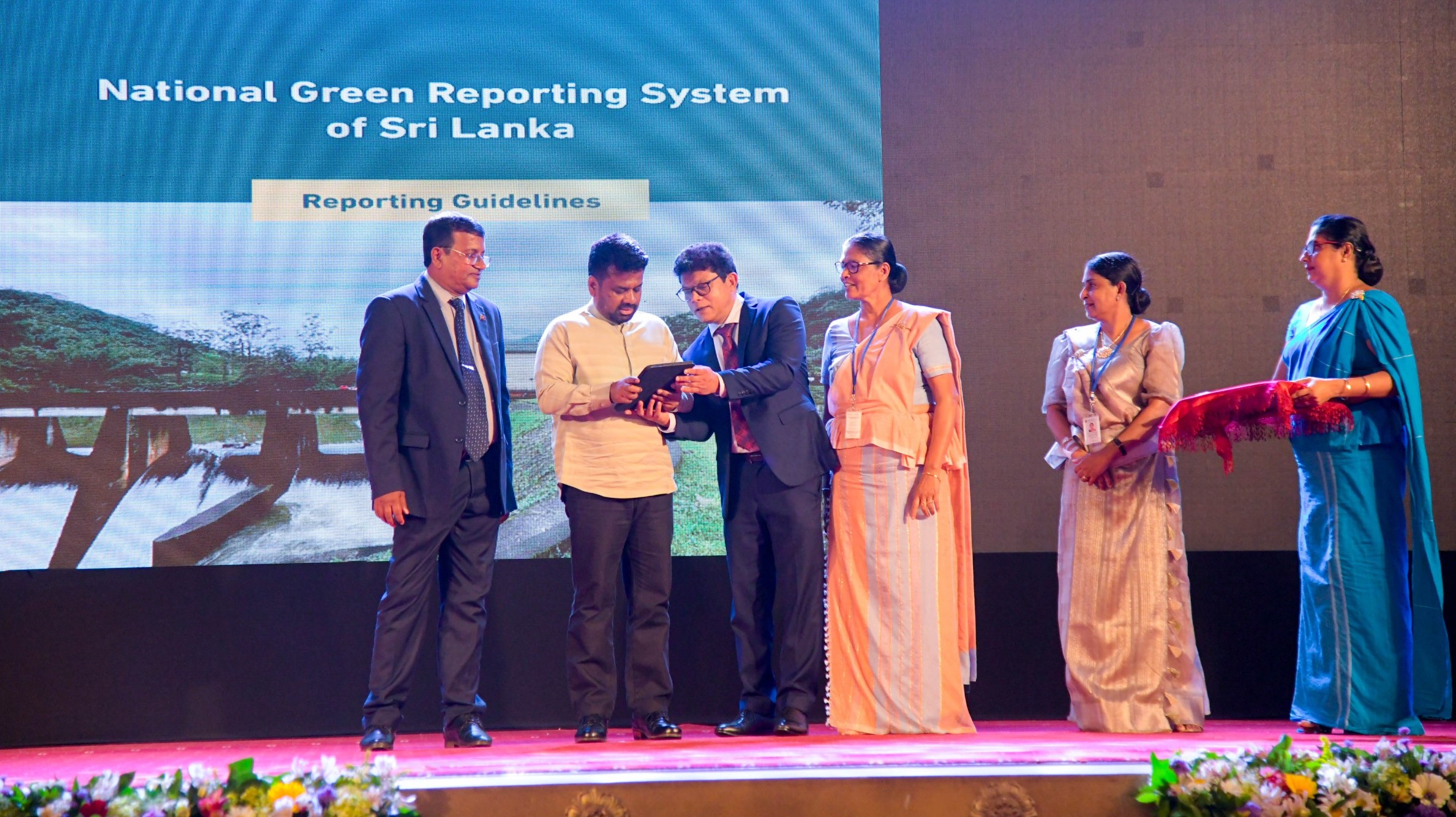
A European Union-funded project has helped revise Sri Lanka’s National Green Reporting System (NGRS), the first overhaul of the framework since its 2011 launch, EconomyNext reported. The updated guidelines align with internationally recognised sustainability standards and are intended to help public- and private-sector organisations track and disclose environmental, social and governance (ESG) data more rigorously.
The work was delivered under the Accelerating Industries’ Climate Response in Sri Lanka (AICRSL) project, implemented by the United Nations Industrial Development Organization (UNIDO). The NGRS was originally introduced in 2011 through the SWITCH-Asia Programme and has now been brought into line with the Global Reporting Initiative (GRI) standards, the EU Delegation in Sri Lanka said.
“By aligning the National Green Reporting System with globally recognised standards such as the Global Reporting Initiative standards, we are supporting Sri Lankan companies generate robust, comparable environmental, social, and governance data, demonstrate compliance with evolving EU and global sustainability requirements, and preserve and expand their access to high-value international markets,” said Dr Johann Hesse, Head of Cooperation at the Delegation of the European Union to Sri Lanka.
The NGRS provides a single platform for organisations across the manufacturing, commercial and service sectors to measure, manage and disclose sustainability performance. EU officials said the revised guidelines should help businesses improve operational efficiency, strengthen stakeholder trust, attract investment, manage risks and identify new market opportunities — particularly important as the EU rolls out tightening corporate sustainability disclosure rules that affect supplier and exporter compliance.
“As global markets increasingly value transparency and sustainability performance, the NGRS provides Sri Lankan organisations with a practical pathway to align with international standards, strengthen competitiveness, and contribute meaningfully to national and global sustainability goals,” said Jagathdeva Vidanagama, Chief Technical Specialist of the AICRSL Project.
The NGRS revision is the second EU-funded sustainability-track announcement this week, following the eco-industrial parks training programme launched on June 2 with French institutional support, and adds to the ongoing EU–UNIDO apparel net-zero roadmap work in the export-led garment sector.
Sources: