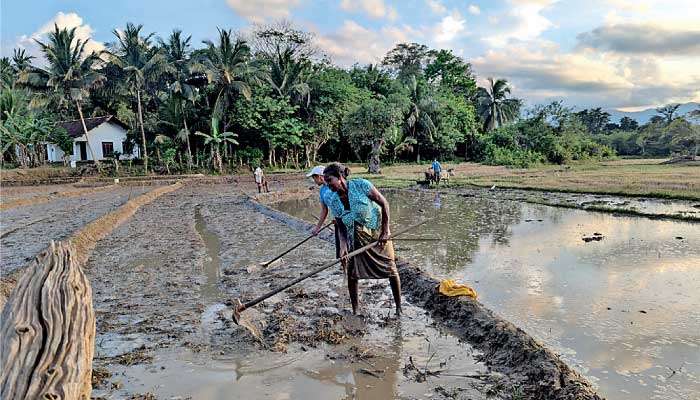
Soaring fertiliser costs and pockets of urea scarcity are pushing Sri Lankan farmers to abandon cultivation plans for the Yala season, with economists and the agriculture sector warning the looming Maha season is at greater risk if shortages persist into the second half of the year.
In Pitakumbura in Bibile, 33-year-old paddy farmer Dinushi Madumali has finished preparing her land but cannot find affordable urea in nearby towns, the Daily FT reports. “Without urea the plants will wither. There won’t be a rice harvest, so there’s no point cultivating the field without it,” she said. In Jaffna’s Pandatharippu, farmer Anandarasa has already abandoned this Yala season because of unaffordable fertiliser and fuel costs.
Economist Rehana Thowfeek said urea was now trading at twice its pre-war price, but stressed the situation should not be conflated with the 2022 chemical-fertiliser ban. “It is not completely right to compare this to 2022. That was a crisis of our own making. In this case, we are facing a crisis created by someone else,” she said, pointing to global supply disruption from the Middle East conflict. Tea production was already falling because of shortages.
National Fertiliser Secretariat Director Chandana Lokuhewage said Sri Lanka had nearly 150,000 tonnes of urea on hand against a 125,000-tonne Yala requirement, with around 80,000 tonnes already distributed. Private retailers have now been allowed back into urea sales, but open-market prices for newly imported stocks are expected to range between Rs. 15,000 and Rs. 16,000 per 50kg bag, compared with the controlled Govi Jana Seva price of around Rs. 10,200.
Lokuhewage cautioned that the upcoming Maha season would need 180,000 tonnes of urea, with import prices now near $800 a tonne versus $450 previously. The government has floated a tender for 20,000 tonnes and asked private importers to build stocks early.
The strain follows the $800/tonne fertiliser shock flagged in April and the Hormuz-linked global price surge. Some Bibile farmers said they had already stopped selling their harvest, cultivating only for household consumption.