The government has initiated key steps under a national programme aimed at transforming Sri Lanka into a digital economy by fully digitising the state service and enhancing the technological skills of government officials, Ada Derana reported.
The Ministry of Digital Economy framed the initiative as a structural shift from a “person-based” methodology — where service delivery depends on the discretion of individual officials — to a “system-based” approach underpinned by digitisation, EconomyNext reported. “The primary objective of this initiative is to enhance efficiency within the country’s public service and eliminate service delays by developing officers’ technological knowledge to keep pace with rapidly changing global technology,” the Ministry said in a statement after the meeting.
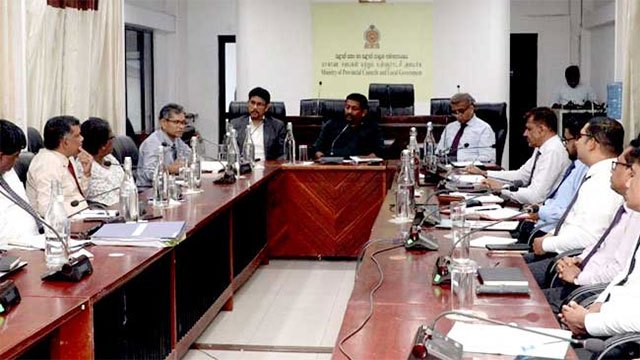
A special discussion on the initiative was held under the leadership of Deputy Minister of Digital Economy Eranga Weeraratne and Deputy Minister of Provincial Councils and Local Government Ruwan Senarath.
The programme identifies several core objectives, including improving efficiency in the state service in line with global technological trends, reducing service delays and enhancing the technical knowledge of state officials. Special focus will be given to reducing technological resistance among senior officials, while prioritising digital literacy and cybersecurity awareness.
Officials proposed an e-learning platform to train hundreds of thousands of state servants, supplemented by a micro-learning approach using short video lessons accessible via mobile phones. There were also discussions on making the completion of digital literacy courses a mandatory requirement for annual performance evaluations and promotions of state officials.
Plans agreed at the meeting include using office and school computer laboratories for afternoon training sessions, introducing gamification methods, and issuing certificates with digital signatures. The programme is to be implemented under a three-pronged strategy covering training of existing employees, mandatory digital qualifications for new recruits, and reforming school and university curricula to align with the digital economy.
As an initial phase, a short cybersecurity awareness course and practical training on the use of official email systems and collaboration tools for state officials are to be introduced.
The push follows the recent winding down of the Information and Communication Technology Agency (ICTA) and its merger into the new Digital Economy Authority and Cabinet approval of a Rs. 563 million GovTech Marketplace platform for state procurement. The Sri Lanka Computer Emergency Readiness Team has separately issued a series of public warnings over AI-generated and impersonation scams targeting officials and citizens in recent months.