Iran could issue a 30-day ultimatum to the United States to remove military threats before reopening the Strait of Hormuz under Iranian administration, a member of Tehran’s negotiating team said in an interview with the semi-official Fars news agency.
“Under this proposal, Tehran should announce that the reopening of the Strait of Hormuz under Iranian administration will only be possible 30 days after all threats from the United States and its allies have been removed,” said Majid Shakeri, who was part of Iran’s delegation at the recent Islamabad talks.
The framing inverts Washington’s longstanding demand. The US placed a naval blockade on the strait in April after Iran effectively shuttered the waterway following the start of US-Israeli strikes on February 28. American officials have insisted the strait must be “completely open” after the war with zero tolls or conditions — terms Trump publicly added to the May 28 outline he pushed back to Tehran and reaffirmed in the Situation Room conditions floated on May 29-30.
Separately, Iran’s Department of Environment chief Shina Ansari told Tasnim that a proposal to charge maritime and environmental service fees on Hormuz transit is under review. “The discussion is not merely about collecting fees; rather, it concerns the provision of services, which could include navigational guidance, search-and-rescue operations, ensuring the security of vessels, and protecting the marine environment,” Ansari said. Part of the proposed fees would cover environmental damage from shipping traffic, she said.
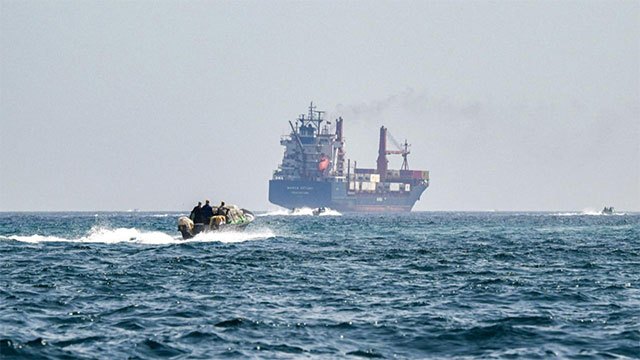
Commercial traffic through the waterway remains significantly reduced as US-Iran talks stay deadlocked. Iranian officials have continued to assert Tehran’s sovereignty over the strait jointly with Oman, and a senior Iranian MP earlier said ships transiting with Iranian permission are now paying an average fee of between $1.5 million and $2 million — figures that align with the Hormuz toll regime Iran’s parliament codified in April. The fee architecture proposed by Ansari would put that informal regime on a more formal footing.
The latest signals follow Iran’s June 1 suspension of US talks and the closure of the strait, which sent Brent prices sharply higher and intensified pressure on Sri Lanka’s fuel-import bill. CPC’s May fuel import cost of US$522 million reflects the premiums Colombo continues to pay for Hormuz-risk shipping.
Source: Ada Derana (citing CNN/Agencies).