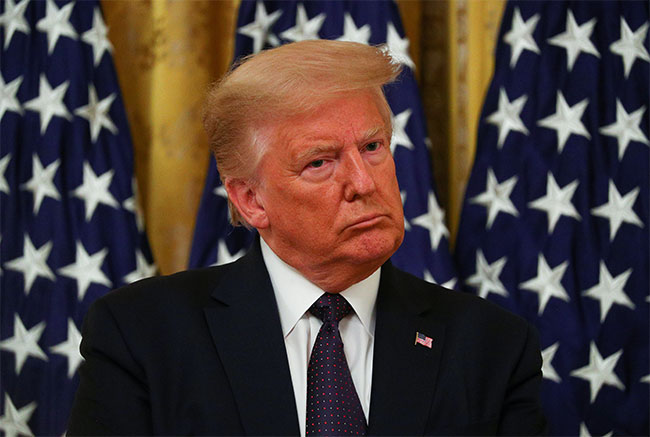
Iran pushed back publicly on Friday against several of the conditions President Donald Trump set out before heading into the White House Situation Room to decide on extending the ceasefire, while US Treasury Secretary Scott Bessent and the White House laid out additional terms of a possible agreement, Ada Derana reported, citing Reuters.
A White House official said Trump’s Situation Room meeting lasted about two hours but did not say whether a decision had been taken. “President Trump will only make a deal that is good for America and satisfies his redlines. Iran can never possess a nuclear weapon,” the official said. A senior Iranian source told Reuters an agreement was close but had “not yet been approved.” The same source said the potential deal does not include any nuclear-related issues — at odds with Trump’s public demand that Tehran dismantle its weapons capacity.
Iran’s Foreign Ministry spokesperson Esmaeil Baghaei said on state television that management of the Strait of Hormuz “must be decided by Iran and Oman,” directly rejecting Trump’s call for the chokepoint to be “immediately open” with “no tolls” and “unrestricted shipping traffic.” Iran’s semi-official Fars news agency said the strait would reopen under Tehran’s conditions after the US lifts its blockade on Iranian ships, and dismissed Trump’s framing as “an attempt to portray a fabricated victory.”
Bessent, in a separate readout, said the US naval blockade would be “removed slowly” if a deal happens, signalling Washington intends to keep leverage even after any signoff. Fars also reported that the two sides had agreed to release $12 billion in frozen Iranian assets, although Trump said “no money will be exchanged, until further notice.”
Beyond the strait, the diplomatic ground continued to widen. International Atomic Energy Agency chief Rafael Grossi told the Financial Times that Kazakhstan had signalled it was willing to take Iran’s highly enriched uranium stockpile in the event of a deal — Astana already hosts an IAEA-controlled low-enriched uranium bank for member states.
Tehran is also pressing for full sanctions relief, the withdrawal of US forces from the region, and an end to Israel’s offensive in Lebanon as part of any settlement. The war launched by the US and Israel on 28 February has killed thousands, mainly in Iran and Lebanon, and pushed up energy prices globally as Iran’s effective closure of Hormuz disrupted shipping.
Oil prices fell and stocks rose on Friday on the prospect of an agreement. For Sri Lanka, which imports virtually all of its crude oil through Hormuz and saw its first current-account deficit print in months on the back of the war, the gap between Trump’s terms and Tehran’s red lines now sets how quickly any insurance-premium and freight-cost relief reaches the import bill.