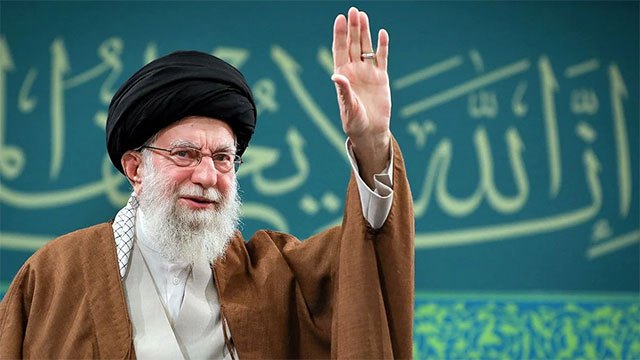
Iran has announced a three-day state funeral for Ayatollah Ali Khamenei, more than three months after the former supreme leader was killed on the first day of the US-Israeli war, Ada Derana reported citing Iranian state media and The New York Times.
Tehran Deputy Mayor for Cultural and Social Affairs Mohammad Amin Tavakoli-Zadeh told state broadcaster IRIB on Tuesday that the farewell, funeral and burial ceremonies of the “Martyred Imam” are being finalised, with public processions to span Tehran, Qom and Mashhad.
“The funeral ceremony in Tehran will last at least 24 hours,” Tavakoli-Zadeh said, adding that authorities are preparing for as many as 20 million attendees in the capital. The venue is still being chosen between Tehran’s Musalla Grand Prayers Hall and the mausoleum of Islamic Republic founder Imam Khomeini.
The body will then be transferred to the holy city of Qom and finally to Mashhad in the northeast, where Khamenei will be interred at the holy shrine of Imam Reza. Officials expect Mashhad to host a large number of foreign pilgrims, particularly from Pakistan, Afghanistan, India, Bangladesh and Kashmir.
Khamenei was 86 when he was killed in a joint US-Israeli strike on his residence on February 28, ending more than three decades as Iran’s supreme leader. Islamic tradition calls for burial within days of death, but Iranian officials announced in early March that the funeral had been postponed indefinitely, citing logistical challenges linked to the expected scale of mourning.
His son, Ayatollah Mojtaba Khamenei, was selected as successor and assumed the role of supreme leader. The new leader is recovering from severe facial and leg wounds sustained in the same strike that killed his father, according to earlier Reuters reporting.
According to the New York Times account cited by Ada Derana, news of Khamenei’s death triggered mixed reactions in Tehran, ranging from disbelief and mourning to public celebrations. The announcement of a public state funeral now — months later and with the war’s military phase largely paused under a fragile US-Iran arrangement — marks Tehran’s first attempt to publicly mark his death on a national scale.