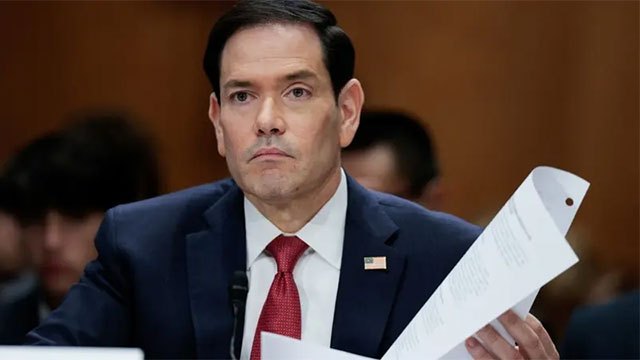
US Secretary of State Marco Rubio told the Senate Foreign Relations Committee on Tuesday that negotiations on Iran’s nuclear programme would be “highly technical” and could take months to conclude, with Tehran first required to reopen the Strait of Hormuz before substantive talks begin.
“Phase 2 is they have to commit to very specific negotiations on … the disposition of the highly enriched uranium that still is buried deep in a mountain somewhere,” Rubio testified. “They have to agree on negotiating severe and long-term limitations, and/or cancellation of enrichment activity in their country.”
He said the technical detail meant the talks could not be wrapped up quickly. “Obviously, these are highly technical matters, so I don’t think you could work those out in five days. That would require a team of experts to meet over a 30-, 60-, 90-day period and work out the details, but they have to commit to their willingness to do that.”
Rubio set out a series of conditions Iran must meet before any expert negotiations begin: Tehran must announce the Strait of Hormuz is open with no tolls, remove mines, and stop firing on ships. He added that the US has not offered Iran sanctions relief in exchange for opening the strait — any easing of sanctions will be conditions-based.
The testimony lays out for the first time a public US timetable for the post-May 28 framework that President Donald Trump is still editing for a third round — including the Hormuz transit rules and the fate of Iran’s stockpile of highly enriched uranium. Iran suspended bilateral talks on Sunday after CENTCOM struck air-defence and drone control sites at Geruk and Qeshm Island and the IRGC retaliated against a US base in Kuwait. Oil markets jumped 7 per cent at the open after the strait was reaffirmed closed.
Sri Lanka’s fuel import bill has tracked the conflict; the Central Bank Governor warned on Monday that headline inflation could climb to 7 per cent if the Middle East crisis drags on.
Source: Ada Derana (CNN/Agencies).