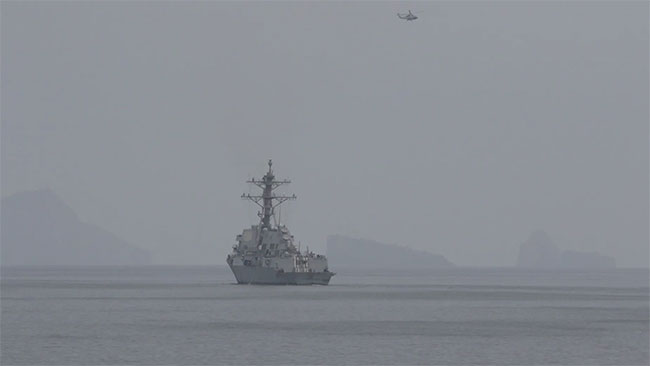
Iran’s state media said on Monday that the country’s navy struck a US warship with two missiles near the Strait of Hormuz, a claim US Central Command immediately denied. The unverified incident sent Brent crude up about 5% and renewed pressure on Sri Lanka’s already strained fuel-import bill.
Iran’s Fars news agency, citing local sources, said two missiles hit a US Navy vessel near Jask Island after it ignored warnings and attempted to enter the strait. The vessel turned back, the agency said. State television added that the Iranian navy had “prevented the entry of US warships in the Strait of Hormuz.” US Central Command, in a post on X, rejected the account: “no US Navy ships have been struck. US forces are supporting Project Freedom and enforcing the naval blockade on Iranian ports.” Reuters said it could not independently verify the Iranian claim.
Brent crude futures rose $5.52, or 5.1%, to $113.69 a barrel by 1025 GMT, while US West Texas Intermediate climbed 5% to $107.04. The United Kingdom Maritime Trade Operations agency separately reported a tanker had been hit by unknown projectiles while transiting near Fujairah in the United Arab Emirates. UBS analyst Giovanni Staunovo said prices remained “skewed to the upside as long as flows through the Strait remain restricted.”
Iran’s military warned American forces against entering the strait and said it would “respond harshly” to any threat — an escalation from the warning issued earlier on Monday by Iran’s unified armed-forces command. President Donald Trump’s Project Freedom escort plan began the same day, with US Central Command pledging 15,000 personnel and more than 100 aircraft, warships and drones to “guide” stranded ships out of the Gulf.
Separately, Iranian media reported that Kuwaiti crude oil exports fell from more than one million barrels a day to zero in April — the first such disruption since the 1991 Gulf War — citing data from oil-tracking platform TankerTracker. The April collapse confirms the strait’s effective closure is now showing in actual export flows, not only in shipping-risk premiums. OPEC+ members on Sunday announced a third consecutive monthly output increase of 188,000 barrels per day for June, but additional barrels are expected to remain on paper while the war continues.
For Sri Lanka, the renewed Hormuz risk arrives days after Ceylon Petroleum Corporation’s fourth fuel-price hike in five weeks lifted 92-octane petrol to Rs. 410 a litre. Brent above $100 has been the working baseline for CPC’s monthly cost-reflective revision; a sustained move toward $115 would tighten the next adjustment.
Sources: Ada Derana — Iran claim, Ada Derana — US denial, Ada Derana — oil jump, Ada Derana — Kuwait exports.