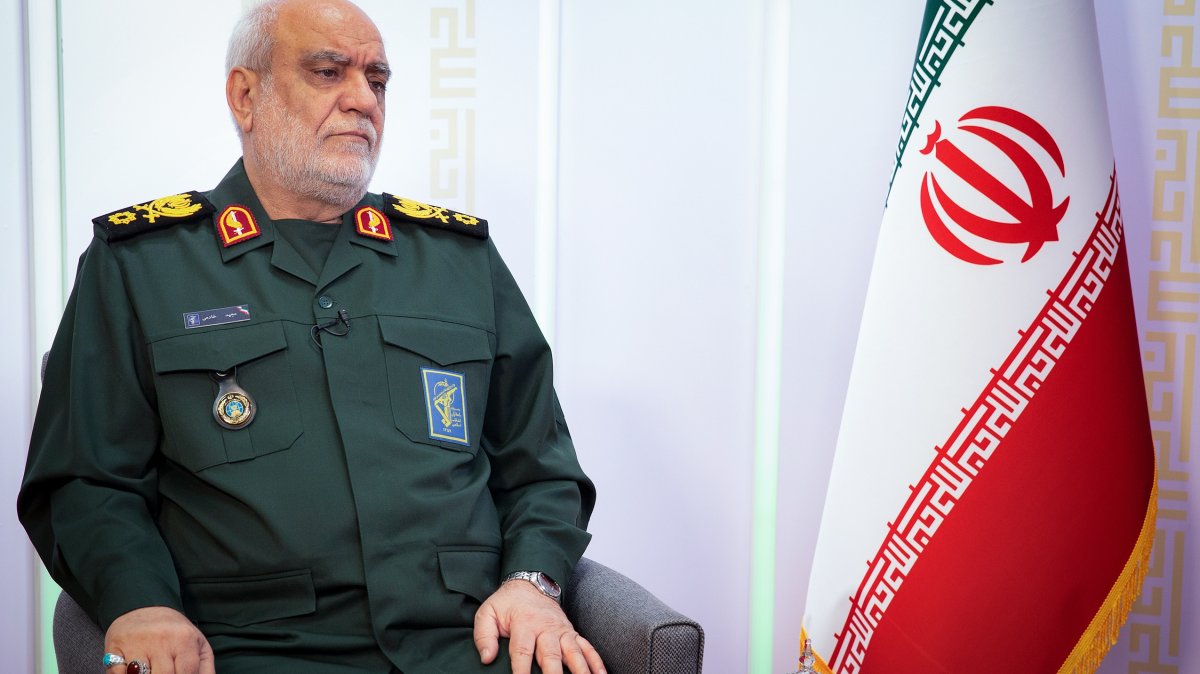
Major General Seyyed Majid Khademi, head of the Islamic Revolutionary Guard Corps (IRGC) Intelligence Organization, was killed in a wave of US-Israeli airstrikes on Tehran suburbs at dawn on April 6, the IRGC confirmed. At least 25 people, including six children under age 10, died in the attacks.
The strikes hit two three-storey residential buildings in the Shahriar and Baharestan districts southwest of the Iranian capital. Quds Force special operations commander Asghar Bagheri was also killed in the same operation, according to Israeli military statements.
A senior figure in Iran’s security command
Khademi had been appointed IRGC intelligence chief in June 2025 after his predecessor Mohammad Kazemi was killed in an earlier Israeli strike. A senior Israeli official described him as effectively the second-ranking commander in the IRGC and one of the few senior figures to survive months of targeted killings.
The IRGC said in a Telegram statement that Khademi was “martyred in the criminal terrorist attack by the American-Zionist enemy.” Israeli Defence Minister Israel Katz confirmed the operation: “Iran’s leaders live with a sense of being targeted. We will continue to hunt them down one by one.”
Iranian retaliation
Iran responded with cluster munition strikes on Israeli cities, with around 20 impact sites recorded near Tel Aviv and 10 in the Haifa area. At least two people were killed in Haifa when an Iranian missile struck an apartment building. Iranian drones and missiles also targeted Gulf states and UAE facilities.
Sri Lanka exposure deepens
The escalation extinguishes hopes of an imminent de-escalation just as President Trump’s April 6 deadline for Iran to reopen the Strait of Hormuz reaches its final hours. With Iran already demanding war compensation as a precondition for reopening the waterway, the proposed 45-day ceasefire now appears even less likely.
For Sri Lanka, the deepening conflict locks in the fuel supply crisis that has forced QR rationing, gas price hikes and a four-day work week. Roughly 60% of Sri Lanka’s fuel transits the Strait of Hormuz, and the closure has already triggered a dual macro shock alongside the 44% Trump tariff that activates April 9.