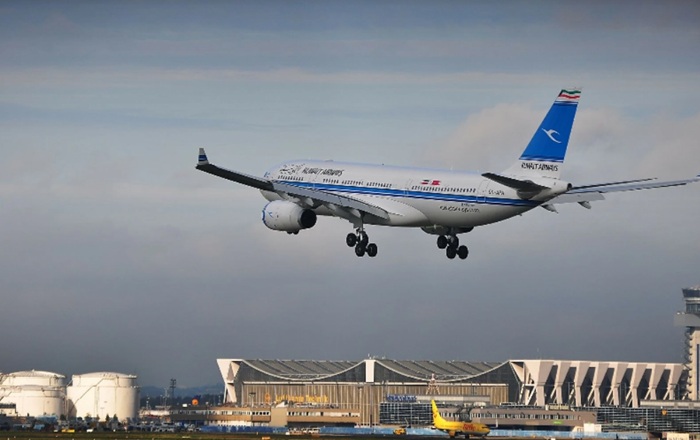
Air traffic at Kuwait International Airport was suspended and inbound flights diverted to nearby airports on Wednesday after Iranian missiles and drones struck Terminal One, causing casualties and damage to several facilities, Kuwait’s civil aviation authority said.
According to a report by Gulf News cited by Newswire, Kuwait’s Public Authority for Civil Aviation immediately activated its emergency plan in response to the strike, the first reported direct hit on the Gulf state’s main civilian aviation hub since the Iran-US war began.
PACA spokesman Abdullah Al-Rajhi said authorities were implementing established protocols to safeguard workers and passengers and to secure airport facilities. Security and technical contingency measures had been enforced to enable the eventual resumption of operations, he said.
Technical teams were assessing the extent of the damage before repair work begins.
Three Sri Lankan nationals were among the 63 people injured in the attack, the Sri Lankan Embassy in Kuwait confirmed. Ambassador Lakshita Ratnayake and Head of Labour Department M. R. C. B. Ekanayake visited the men in hospital. The three were engaged in maintenance work at the airport when the strike hit and sustained head and other injuries from falling glass shards, the ambassador said. None are in critical condition and they were expected to be discharged within a day or two. An Indian national was killed at the airport, the Indian foreign ministry said. Kuwait’s defence ministry said 30 ballistic missiles and drones were launched in what it called “heinous Iranian aggression.” Kuwait’s health ministry said 25 ambulances were dispatched and the injured — including travellers, civilians and airport workers — were distributed among hospitals with serious wounds, including head trauma, cerebral haemorrhages and amputations.
The attack lands less than 48 hours after US strikes on Iranian targets at Geruk, Qeshm and a Kuwait base, and follows direct Iranian drone-and-missile salvos on civilian infrastructure in Fujairah a month earlier. Tehran has previously warned that Gulf states hosting US military assets are legitimate targets if the campaign against Iran continues.
The disruption has direct travel implications for Sri Lanka. Kuwait Airways operates weekly flights to Colombo, and Kuwait is a major transit point for Sri Lankan migrant workers in the Gulf.
The Ministry of Foreign Affairs, Foreign Employment and Tourism on Thursday issued a formal statement expressing “deep concern” over the attack on civilian infrastructure at the airport and the injuries to the three Sri Lankan nationals. The statement said the safety and well-being of “over one million Sri Lankan citizens living and working in the region” remained a paramount priority for the government, and called on all parties to exercise maximum restraint, reaffirming Colombo’s commitment to supporting global efforts to uphold regional peace, security and the protection of civilians.
The strike came on the same day Iran said it had targeted the US Fifth Fleet headquarters in Bahrain and a Liberian-flagged tanker near the Strait of Hormuz, marking one of the most intense days of Iranian retaliatory action of the war so far.