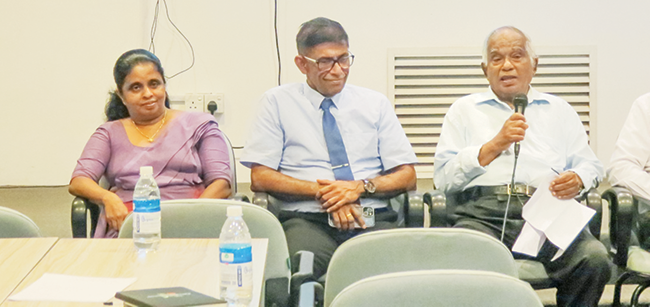
Nearly half of Sri Lanka’s population is now unable to afford a nutritious diet, leading nutrition experts have warned at a Science Forum on Food Security held at the National Science Foundation auditorium in Colombo.
Prof Renuka Silva of the Department of Nutrition and Dietetics at Wayamba University of Sri Lanka outlined what he described as the country’s emerging “nutrition paradox” — a condition in which people may be consuming enough calories to survive yet are increasingly unable to eat well enough to thrive.
“Are Sri Lankans eating enough? Yes. Are Sri Lankans eating well? Not always,” he said in a presentation themed “Food Habits in Crisis: Reshaping Diets in Sri Lanka.”
He said Sri Lanka was facing one of its most severe multi-layered crises in recent history, combining economic contraction, post-pandemic recovery challenges, climate shocks, and global market disruptions linked to Middle East tensions. The result, he said, was rising stress, anxiety, reduced savings and declining wellbeing, now directly reflected in deteriorating food consumption patterns.
A central concern raised at the forum was the widening affordability gap between a basic energy-sufficient diet and a nutrient-rich one. A diet that only meets minimum energy requirements costs approximately Rs. 468 per household per day — around Rs. 14,095 a month. A truly nutritious diet of diverse, nutrient-dense food groups costs around Rs. 1,707 per household per day, or about Rs. 51,210 a month, more than three times as expensive.
This disparity has pushed 47% of Sri Lankans out of reach of a nutritious diet, with non-affordability rising to 73% in rural districts such as Monaragala. As of December 2024, 16% of households remain food insecure while 26% consume inadequate diets.
Prof Silva also described a troubling shift in national eating patterns characterised by what he called “the rice dependency” — an excessive reliance on carbohydrates at the expense of dietary diversity. Sri Lankans consume only about one-third of the World Health Organization’s recommended 400 grams of fruits and vegetables a day.
The forum complements earlier warnings from the Family Health Bureau’s “triple burden” of child malnutrition framing and feeds into the post-Cyclone Ditwah agricultural recovery effort under FAO and Australian funding.