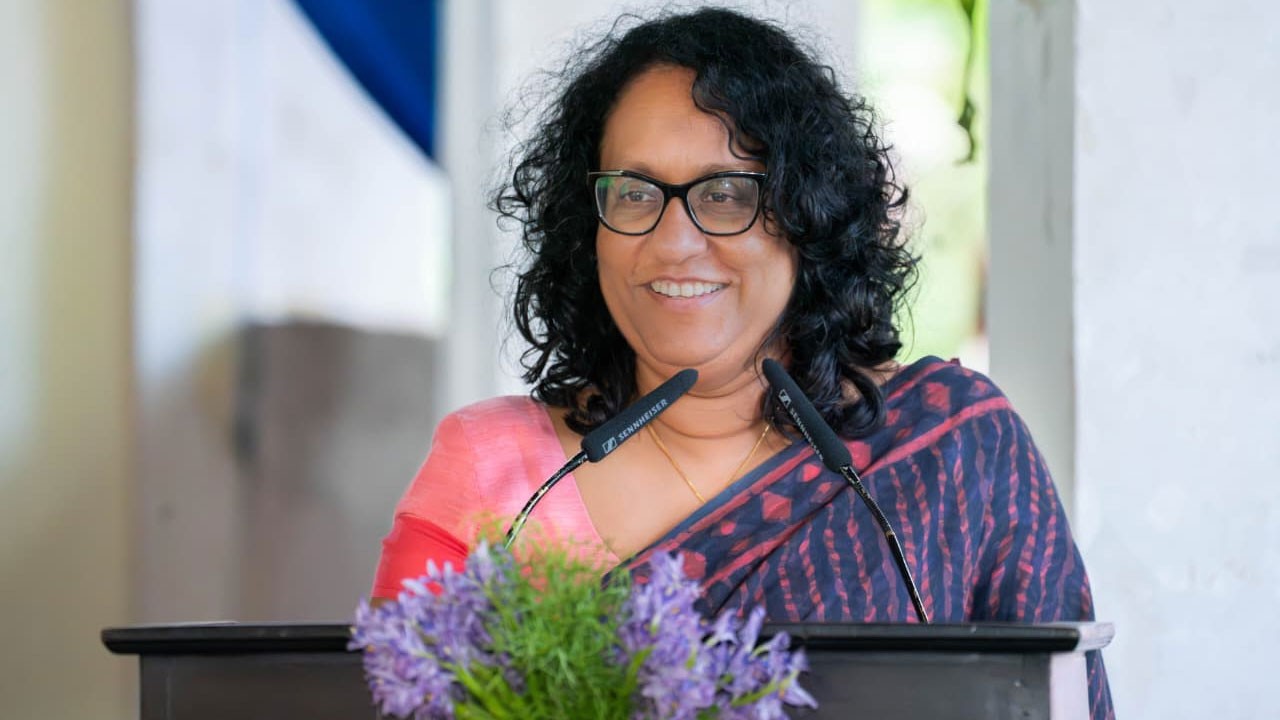
Prime Minister Harini Amarasuriya has called for Sri Lanka’s primary school system to expose children to aesthetics and sports from an early age, arguing that exposure to these fields is essential to producing future leaders.
The Prime Minister, who also holds the Education, Higher Education and Vocational Education portfolio, was speaking at the “Punchi Hapannu 2026” awards ceremony, which recognises the winners of the Primary Literary Skills Competition held across the Polpithigama Education Division in Kurunegala District. The event was held on Wednesday at Polpithigama National School as part of an educational inspection tour of the district, the Prime Minister’s Media Division said.
“Primary education is a broad and multifaceted field. The foundation provided through primary education is important in guiding a child along the right path. A child has only one opportunity in life to experience primary education, and it is our responsibility to ensure that this opportunity is provided in the most appropriate way,” Amarasuriya said. “Likewise, we are striving to build an education system that provides opportunities for children across Sri Lanka to develop their hidden talents.”
The Punchi Hapannu competition drew students from 49 primary schools in the Polpithigama Education Division across 17 categories, with the ceremony also featuring aesthetic performances by the winners. The Prime Minister awarded certificates to the winners and described the initiative as “an example for the entire country”.
Following the ceremony, Amarasuriya visited Makulpotha Maha Vidyalaya and laid the foundation stone for a new two-storey school building. The Rs.45 million construction project is scheduled for completion in 2026, with the new facility to be handed over to students in January 2027. Deputy Minister of Agriculture and Livestock Namal Karunaratne and Kurunegala District MP Geetha Herath were among those who attended.
The remarks build on the Prime Minister’s recent education policy interventions, including a directive that only government-approved programmes should operate in schools and a broader push for grade-six education reforms taking effect in January 2027.