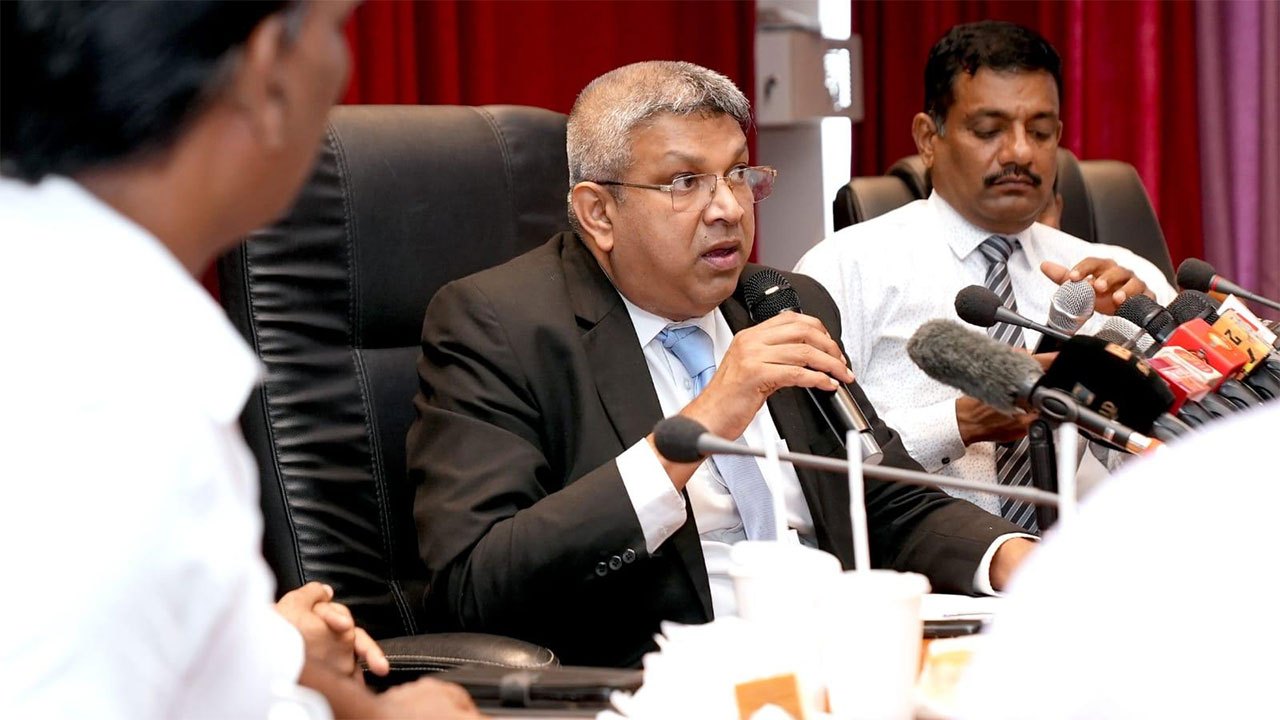
Sri Lanka will repeal the Prevention of Terrorism Act (PTA) before the end of the year and replace it with a “people-centric” counter-terrorism law that is already in the final stage of drafting, Justice Minister Harshana Nanayakkara said in Kilinochchi on Friday.
Speaking in the heart of the former war zone — the politically symbolic Northern district where the PTA’s most contested detentions have historically taken place — the minister said the draft was complete and ready for inter-ministerial review.
“We will definitely abolish the existing Prevention of Terrorism Act and introduce a revised law. It is now in its final stage,” he told the gathering, adding that he expected to present the bill to Cabinet and Parliament within two to three months.
Nanayakkara, an Attorney-at-Law, framed the new statute as both more rights-protective and more narrowly focused than the 1979 PTA. “This law has been created solely to prevent terrorism and not to target any race, religion or individual,” he said, contrasting the National People’s Power government’s progress with what he described as the delays of previous administrations that had repeatedly promised repeal without action.
The PTA permits long pre-charge detention and the use of confessions to police, and has drawn sustained criticism from the European Union, UN human rights bodies and Sri Lankan civil society. The European Union’s GSP+ trade preferences have been formally tied to PTA reform.
The minister said the replacement law was designed to balance national security against fundamental rights protections. He did not detail the new framework’s detention periods, confession admissibility rules or oversight mechanisms.
The PTA remains the chief legal instrument in several active high-profile detentions, including the Court of Appeal challenge by former Director of State Intelligence Suresh Salley and the attempt by former president Gotabaya Rajapaksa to block a possible Easter-attacks arrest. Tamil civil society and opposition MP M.A. Sumanthiran-aligned TNA voices have repeatedly demanded outright repeal rather than replacement.
Sources: Ada Derana, NewsFirst.