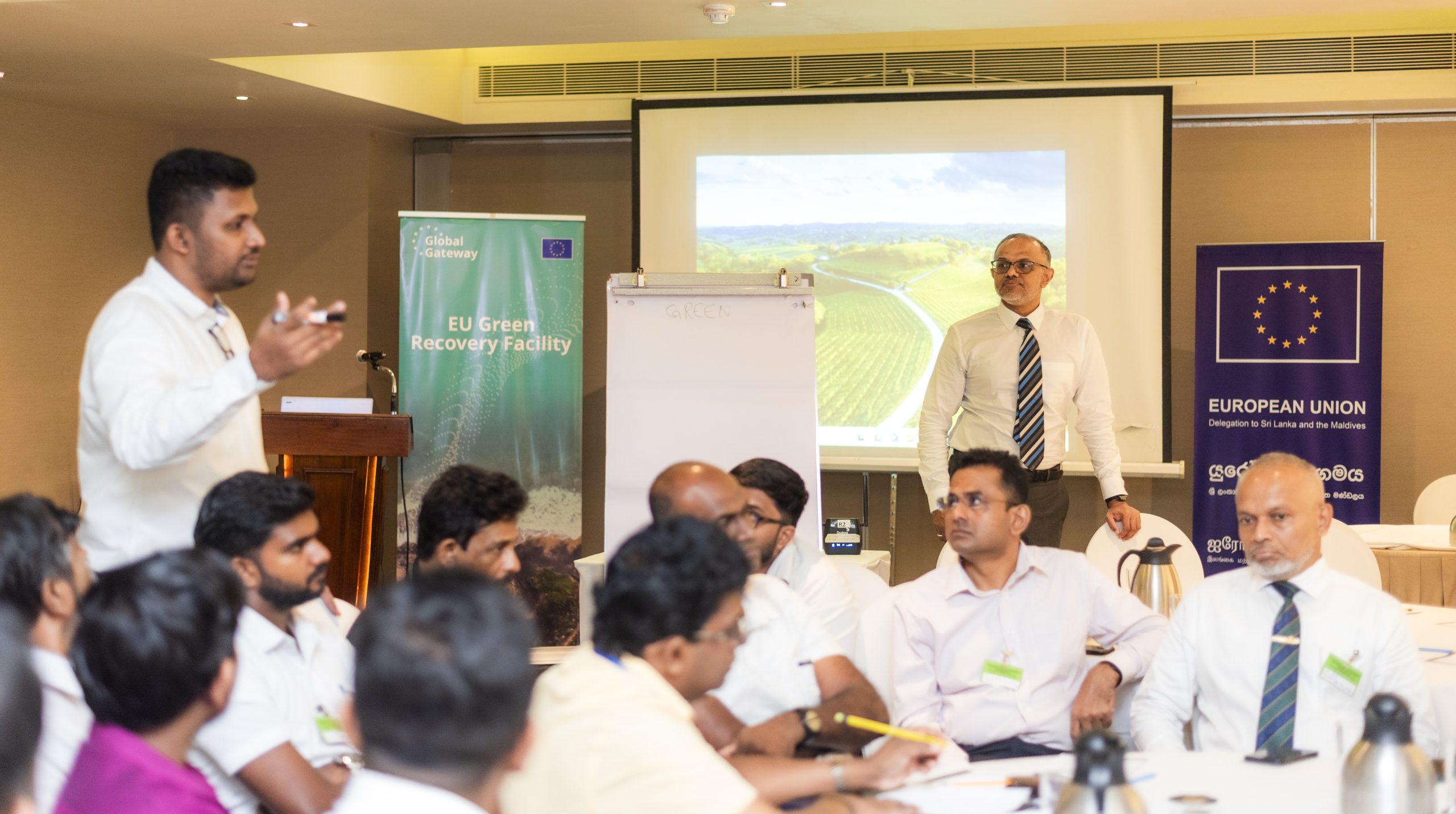
A European Union-funded capacity-building initiative is helping Sri Lanka’s rubber sector prepare for the EU’s incoming Deforestation Regulation (EUDR), with industry stakeholders meeting in Colombo to map out training and traceability requirements ahead of compliance deadlines.
The Rubber Development Department convened the workshop in collaboration with the EU-funded Green Recovery Facility, which is being implemented by Expertise France under the EU’s Global Gateway strategy. The session educated stakeholders across Sri Lanka’s rubber value chain on the EUDR, the EU regulation that will increasingly govern access to European markets for commodities tied to deforestation risk.
Sri Lanka has been classified as a “low-risk” country under the regulation, a designation that the EconomyNext-published article said gives the island “an opportunity to advance sustainability across the rubber sector, strengthen traceability and due diligence mechanisms, and reinforce its position as a trusted supplier in global markets.” Designed to foster deforestation-free supply chains, the EUDR is aligned with broader EU commitments on climate action, biodiversity conservation and forest protection.
Gunadasa Samarasinghe, Secretary of the Ministry of Plantation and Community Infrastructure, said it was important that Sri Lanka’s rubber sector remained competitive and well-positioned to respond to evolving sustainability expectations and seize emerging opportunities in international markets.
The workshop’s findings will shape a capacity-building programme that includes a three-and-a-half-day Training of Trainers (ToT) course and stakeholder-specific training activities. The initiative is expected to directly train approximately 280 stakeholders across the rubber value chain, with discussions covering current awareness levels, the role of government institutions, international best practices and available traceability tools.
The Sri Lankan rubber industry has been listed as one of the plantation-export pillars now under acute revenue pressure as global prices ease, making the EUDR readiness work a strategic insurance policy against losing EU market access. The EU continues to engage Sri Lanka on trade-and-investment, including a recent business roundtable in Colombo led by Deputy Foreign Minister Arun Hemachandra.
Source: EU project prepares Sri Lanka rubber industry for deforestation regulations — EconomyNext, June 19.