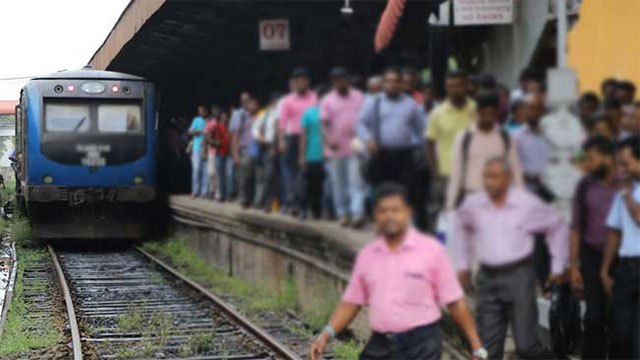
The Sri Lanka Railway Station Masters’ Association (SLRSMU) said on Monday that the number of daily train services has fallen below 200, less than half the level operated before the COVID-19 pandemic, and warned that the railway sector’s deterioration is undermining the country’s wider public transport push.
General Secretary Kasun Chamara Jayasekara said more than 420 daily services — including passenger, mixed, fuel-transport and freight trains — were running before the pandemic. That figure dropped to around 350 after the pandemic, fell further to roughly 250, and has now declined to fewer than 200 a day, the union said. Two services were cancelled on Monday alone, Jayasekara said, adding that even the trains still in operation frequently fail to adhere to published timetables.
The Association attributed the contraction partly to the failure to properly modernise and maintain railway locomotives after recent crises. Jayasekara said the railway should have been strengthened during the fuel shortages of the past three years but had not received adequate attention, leaving the network unable to absorb passenger demand.
He pointed to the Talaimannar line as a particularly stark case: although upgrade work has been completed, no train services are operating because the locomotives previously allocated to the route have been reassigned elsewhere, creating additional pressure on the Northern Line. Four services per day previously operated on the Talaimannar line.
The Association also criticised the perception among some railway officials that operating fewer trains reduces costs and improves financial performance. Jayasekara called on responsible officials to intervene and restore train operations to at least pre-pandemic levels while expanding services to meet growing public demand.
The union’s intervention adds operational stress data to a sector already absorbing two parallel disruptions in June: the cyberattack on the Sri Lanka Railways website that disabled the train timetable system on Sunday, and the partial closures from the Cyclone Ditwah recovery that have suspended Kandy main-line services through end-2026 and restricted upcountry services beyond Rambukkana. The government has separately committed to multi-billion-rupee modernisation, including an ADB-backed Rs. 2.1 billion upgrade at Fort Railway Station and a planned shift to electric commuter services in the Western Province by 2027.
Source: Daily train journeys fall below 200, Station Masters’ Association claims — Ada Derana, June 15.