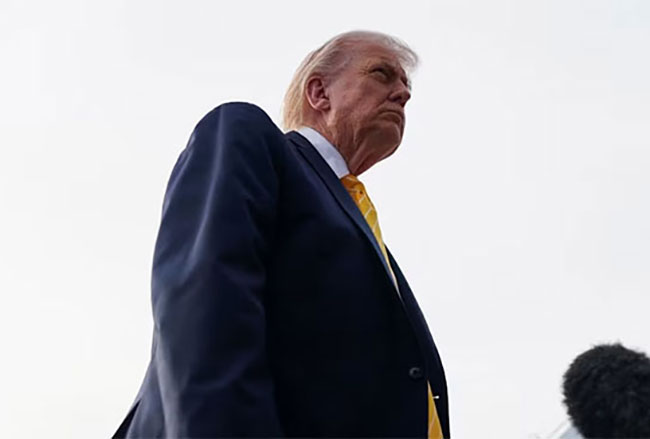
US President Donald Trump said on Sunday he was unlikely to accept Iran’s latest peace proposal because Tehran had “not yet paid a big enough price,” even as a parallel war between Israel and Hezbollah escalated in southern Lebanon.
In a post on his Truth Social platform, Trump said he had not yet reviewed the exact wording of the proposal but added: “I will soon be reviewing the plan that Iran has just sent to us, but can’t imagine that it would be acceptable in that they have not yet paid a big enough price for what they have done to Humanity, and the World, over the last 47 years.”
The remarks closed a day in which Trump had earlier mused publicly about the possibility of restarting airstrikes on Iran “if they misbehave” — the latest mixed signal as he attempts to end the war he launched on February 28. The US and Israel suspended their bombing campaign four weeks ago, but a deal to end the war remains elusive.
A senior Iranian official said on Saturday that Tehran’s proposal would first reopen the Strait of Hormuz and end the US blockade of Iranian ports, with talks on Iran’s nuclear programme deferred to a later stage. Washington has demanded Iran surrender its stockpile of more than 400kg of highly enriched uranium as a condition for ending the war, arguing the material could be used to build a bomb. Iran maintains its programme is peaceful.
The diplomatic stalemate is unfolding alongside fresh fighting between Israel and Hezbollah. On Sunday, the Israeli military issued urgent evacuation orders to residents of 11 towns and villages in southern Lebanon, telling them to move at least 1,000m from Hezbollah positions. The military said it was conducting operations following a “violation of the ceasefire” with the Iranian-backed group. Iran has linked the resumption of talks with Washington to a durable Lebanon ceasefire.
Trump is under domestic pressure to break Iran’s hold on Hormuz, through which roughly 20 per cent of global oil and gas flows. Higher US gasoline prices risk a voter backlash for the Republican Party in November’s midterm congressional elections.
Source: Ada Derana — citing Reuters.