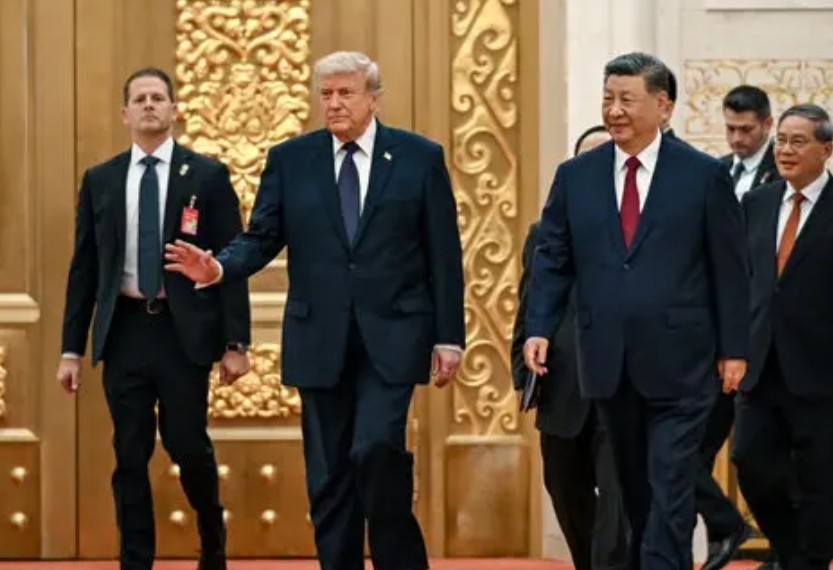
Chinese Foreign Minister Wang Yi has outlined the key outcomes of the recent Xi-Trump summit, framing the nine-hour Beijing meeting as “historic” and articulating a vision of a “constructive relationship of strategic stability” built on four pillars.
Speaking in a structured Q&A briefing released Tuesday — hours after he received Russian President Vladimir Putin at Beijing airport for a separate two-day summit — Wang Yi said the China-US relationship should be “positive (not negative), healthy (not sick), constant (not volatile), and lasting (not temporary).”
Key takeaways from the readout: Xi will pay a state visit to the United States this autumn at Trump’s invitation, with both sides preparing to “lengthen the list for cooperation and shorten the list of irritants” through their political and trade channels. Beijing described the summit as a “new starting point” — the first Xi-Trump face-to-face since Busan in October and the first US presidential visit to China in nine years.
Wang Yi cited three questions Xi raised at the summit: whether China and the United States can overcome the “Thucydides Trap” between rising and ruling powers, whether they can address global challenges together, and whether they can build a future for both peoples. He also announced that both sides would support each other in hosting this year’s APEC Economic Leaders’ Meeting and the G20 Summit — a signal that the multilateral calendar will be the immediate test of the new framework.
On people-to-people exchanges, Xi referenced “Ping-Pong diplomacy” 55 years ago and renewed his initiative to invite 50,000 young Americans to study in China over five years. Trump in turn said he welcomed Chinese students to the United States.
Wang Yi noted that this is the first time China has hosted Russian and US leaders in the same month outside a multilateral setting, with Putin arriving in Beijing on May 19. The Russian visit will cover Ukraine, energy and the Power of Siberia 2 pipeline. The summit-stack — Trump’s Beijing visit followed days later by Putin’s — has positioned Beijing as the diplomatic centre of gravity for the current phase of the US-Iran war and broader great-power realignment.