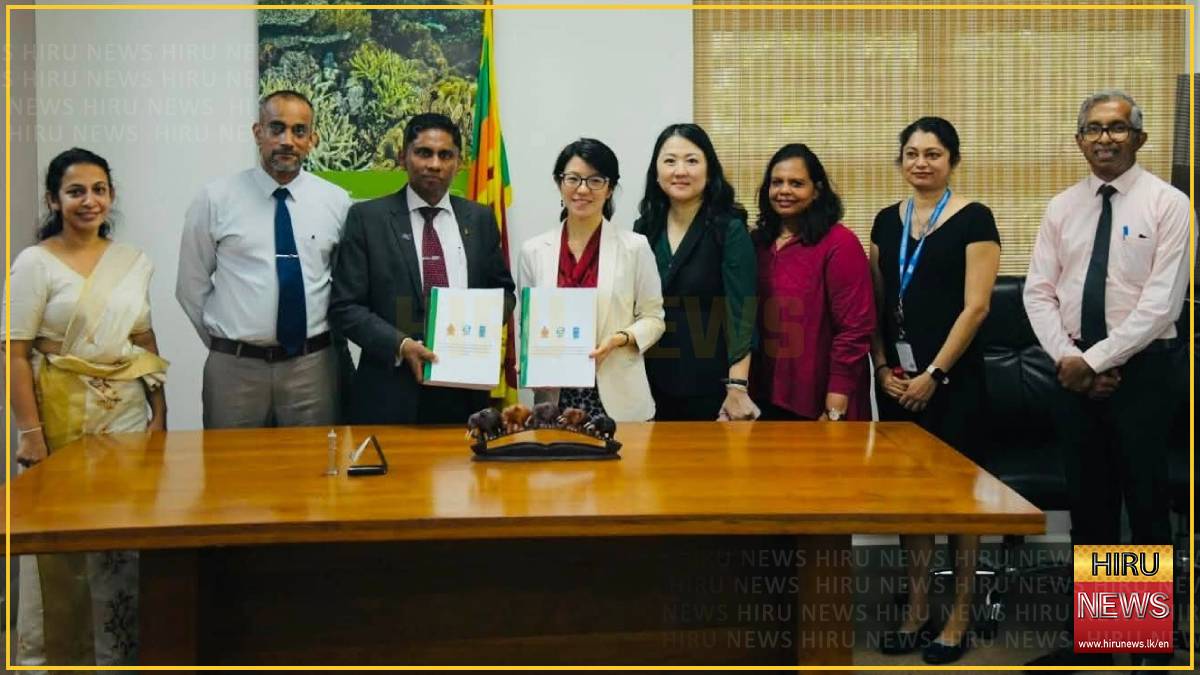
Sri Lanka has signed an agreement with the United Nations Development Programme for a five-year conservation project worth US$4.507 million, funded by the Global Environment Facility, EconomyNext and Hiru News reported.
The project aims to generate sustainable economic benefits through the conservation of critical biodiversity and ecosystem services in the eastern and southern coastal regions.
Where it runs
Work will cover the Ampara, Batticaloa and Hambantota districts, focusing on biodiversity conservation, ecosystem resilience and nature-based economic opportunities for coastal communities.
The five priorities
- Strengthening governance and institutional capacity for landscape and seascape management
- Improving financing for nature-based solutions
- Demonstrating ecosystem-based management in coastal areas
- Advancing awareness, knowledge and gender mainstreaming
- Strengthening monitoring and evaluation
“Through a community-focused, multi-sectoral approach, this project will help safeguard Sri Lanka’s terrestrial, coastal, and marine ecosystems while building climate resilience and sustainable livelihoods for coastal communities,” the UNDP said.
Who signed
The agreement was signed by K. R. Uduwawala, Secretary to the Ministry of Environment, and Azusa Kubota, UNDP Resident Representative in Sri Lanka. Mohan Heenatigala, the ministry’s Director of Biodiversity, attended along with other UNDP representatives.
Kubota has signed a series of agreements with Sri Lankan institutions this year, including a second phase of financial literacy work with the Central Bank. UNDP set out a broader country programme pledge in August.
The districts are under water stress now
Two of the three target districts are the ones currently at the sharp end of the dry spell. Ampara and Batticaloa reservoirs were reported at 21.5 per cent and 25.3 per cent of capacity respectively at the start of September, and the Irrigation Department reported levels falling further today. A project premised on building climate resilience for coastal communities is therefore starting in districts already managing a shortage — a point neither report drew out.
Not reported
Neither outlet gave a start date for the project, an implementing timetable, or the split of the US$4.507 million across the three districts or the five priority areas. Neither said how many communities or hectares are covered, or what the GEF funding cycle behind it is.
Neither report named specific ecosystems — lagoons, mangroves, seagrass beds or reefs — that the project will target, and neither quoted Uduwawala or Kubota directly. No date or venue was given for the signing.
Update, September 8: NewsFirst has filed its own account, which closes two of the gaps above. It gives the project’s full title — Promoting Sustainable Economic Benefits through the Conservation of Critical Biodiversity and Ecosystem Services in the Eastern and Southern Coastal Regions of Sri Lanka — and states that it will be implemented by the Ministry of Environment under the National Implementation Modality, meaning the ministry executes the work directly rather than through a UN agency. NewsFirst also confirms the US$4.507 million is a grant from the Global Environment Facility with UNDP support, rather than a loan or blended facility. It adds no start date, timetable or district-level breakdown, and like the other two reports quotes neither signatory.
Sources
- Sri Lanka, UNDP sign $4.5mn coastal biodiversity pact — EconomyNext, September 7
- Sri Lanka, UNDP Sign $4.5 Million GEF-Funded Project to Strengthen Coastal Biodiversity Conservation — Hiru News, September 7
- $4.5 Mn UN-Backed Project to Protect Sri Lanka’s Coastal Biodiversity — NewsFirst, September 8