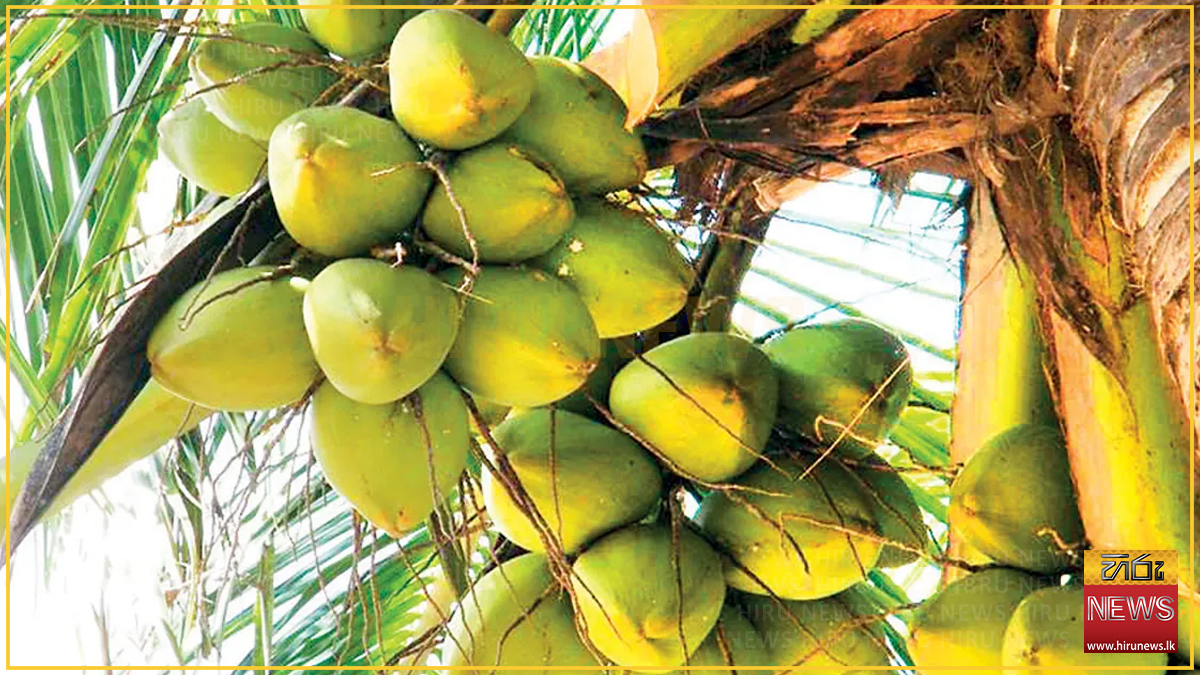
Sri Lanka’s annual coconut yield has fallen even though production rose 24% in the first six months of this year, the Coconut Cultivation Board has said, according to Hiru News.
Board Chairman Dr. Sunimal Jayakody said programmes have been launched to address any further decline in yield.
The two figures do not obviously fit together
Hiru’s report runs to two sentences and does not reconcile them. A 24% rise in first-half production alongside a fall in the annual yield can be read several ways, and the report supports none of them over the others:
- Different measures. “Production” may mean total nuts harvested, while “yield” means nuts per tree or per hectare. Total output can rise while productivity falls — if, for example, more land came into bearing, or more trees were harvested from an ageing stock.
- Different periods. The 24% covers January to June. The fall may describe the full year including a weak second half, or a rolling twelve months that takes in the second half of 2025.
- Against a weak base. A 24% rise measured against a poor first half of 2025 can still leave the year below a longer-run average.
Dr. Jayakody has previously attributed a fall in output to shortages of compost. Which of these explanations applies here is not stated, and the apparent contradiction should be treated as unexplained rather than resolved.
No second newsroom has filed
Hiru News is the only verified outlet carrying the statement. Searches across Ada Derana, the Daily Mirror, NewsFirst, the Island, Daily FT, EconomyNext, Colombo Gazette, Daily News and News.lk returned earlier coverage of the Coconut Cultivation Board — including its 2026 output target and its warnings on leaf blight — but nothing on this statement.
That matters more than usual here. With one two-sentence report and no corroboration, there is no second account against which to test either figure, and no fuller version in which Dr. Jayakody explains the gap.
Where this sits
The statement lands in the middle of a difficult season for the crop. The board set aside Rs. 2,500 million on September 11 for a subsidy programme against El Niño damage, with Dr. Jayakody saying at the time that the dry weather had not yet hit coconut cultivation but that the money was reserved in case it persisted.
If the first-half production figure is accurate, it covers a period largely before the worst of the dry weather — which would make a 24% rise and a weakening yield outlook less contradictory than they first appear, and would place the damage the subsidy is meant to cover in the second half of the year. That reading is plausible but is not what the report says, and it is not asserted here.
The wider drought has affected more than 160,000 people across eight districts, and reservoir storage has fallen to 33.6%.
Not reported
Hiru News gives no absolute figures — not the number of nuts produced in the first half, not the annual yield, and not the size of the decline. It does not say what the 24% is measured against, over what period the annual yield fell, or which measure of yield is meant.
It does not describe the programmes launched to address the decline, say what they cost or when they begin, or state whether they are the same Rs. 2.5 billion subsidy announced three days earlier. It does not give a full-year production forecast, or say where the setting or occasion of Dr. Jayakody’s remarks was.