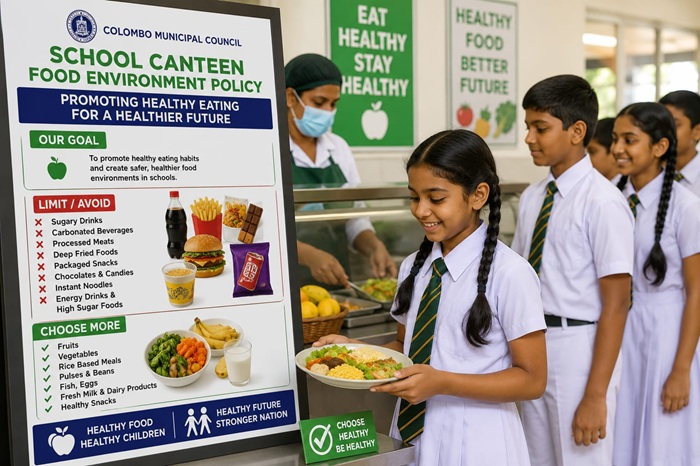
The Colombo Municipal Council (CMC) has introduced a School Canteen Food Environment Policy aimed at promoting healthy eating habits among schoolchildren and creating safer, healthier food environments in schools across the CMC area.
The policy forms part of the CMC’s broader public health efforts and seeks to improve the nutritional quality and safety of foods and beverages available in school canteens. It also aims to reduce children’s exposure to foods high in fat, sugar and salt while supporting efforts to address the growing triple burden of malnutrition among school-aged children.
According to the policy document, the regulations will apply to all government, semi-government, private and religious schools located within the administrative limits of the CMC. The policy will cover all school canteens and food outlets operating within school premises where food and beverages are prepared, sold, distributed or advertised.
The CMC noted that schoolchildren in Colombo are increasingly affected by undernutrition, micronutrient deficiencies, overweight and obesity. Recent school medical inspections have shown a rising trend in childhood overweight and obesity, identified as a major public health concern linked to the early onset of non-communicable diseases.
The policy also highlights concerns over poor dietary habits and increased consumption of sugar-sweetened beverages and foods high in sugar, which have contributed to a growing prevalence of dental caries among children. Poor oral health can negatively affect children’s nutritional status, school attendance and academic performance, the document notes.
Under the proposed guidelines, school canteens will be encouraged to provide safe, nutritious and affordable foods while limiting items high in sugar, salt and unhealthy fats. Processed meats, deep-fried foods, packaged snacks, chocolates, sugary drinks, carbonated beverages, energy drinks and several other items have been listed among products prohibited for sale in school canteens.
The policy instead promotes healthier alternatives, including rice-based meals, fruits, vegetables, pulses, fish, eggs, fresh milk products and healthier snack options. A grading and monitoring system for school canteens will be set up to ensure compliance and maintain standards.
The CMC said successful implementation would require close collaboration between school authorities, health officials, parents, canteen operators and other stakeholders.
The policy aligns with national efforts to curb non-communicable diseases, with Health Minister Jayatissa raising NCDs as a priority at the 79th World Health Assembly in Geneva on Sunday. Sri Lanka’s NCD burden affects one in five adults according to recent ministry data.