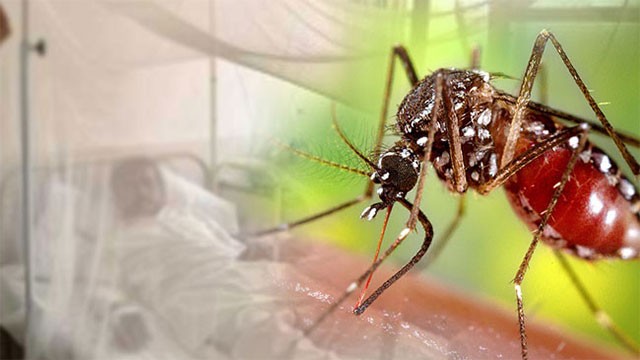
Sri Lanka has recorded 41,144 dengue cases and 24 deaths so far this year, with hospitals facing growing pressure as daily admissions remain at very high levels, the Acting Director of the National Dengue Control Unit Dr. Kapila Kannangara said.
Dr. Kannangara, briefing Ada Derana, said about 51 percent of reported infections have originated from the Western Province. Daily dengue cases had peaked at around 750 patients before declining to roughly 630 per day, a level he described as still dangerously high. “Despite the slight decrease, the number of infections remains at a very high level,” he said. Several hospitals have issued red alerts as wards continue to experience a heavy influx of patients requiring inpatient care.
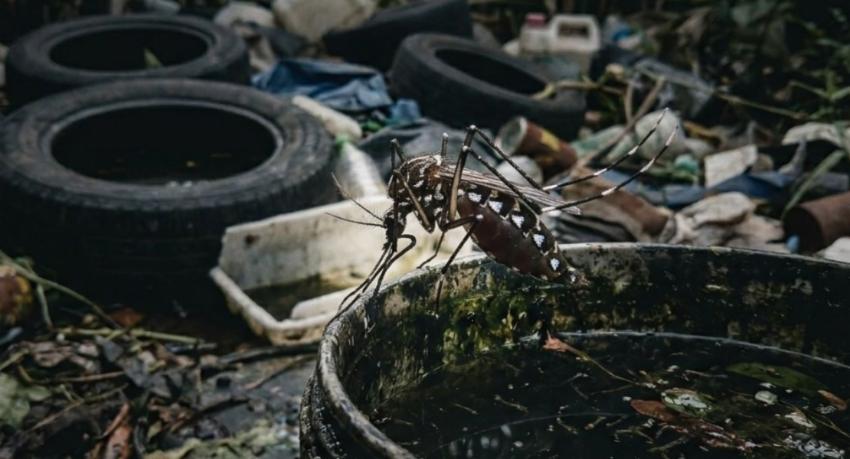
The Government Medical Officers’ Association (GMOA) separately said hospital admissions for viral illnesses, including dengue fever, have increased significantly, joining the National Dengue Control Unit’s warning over operational stress on the healthcare system. Dr. Kannangara said the growing burden on healthcare facilities may eventually exceed the capacity of Sri Lanka’s hospital network if case numbers continue to rise. Authorities have urged the public to eliminate mosquito breeding sites and seek medical attention promptly when symptoms develop.
The figures continue an escalating trajectory. NewsFirst reported on Friday that 21 people had died of dengue, including five schoolchildren, with hospitals already over capacity — meaning the death toll has climbed by three in 24 hours and the islandwide case load has crossed 41,000 from the previous 39,000-plus reading. The escalation comes despite the intensive June 8–10 mosquito control programme across 74 MOH divisions and the first Dengue Day inspection finding more than 2,000 larvae across half of state institutions surveyed. A nationwide Dengue Control Week begins June 15, with the Ministry of Public Administration covering schools, divisional secretariats and provincial council premises.
Update — June 14 evening: New dengue strain identified
Deputy Minister of Health Hansaka Wijemuni said Sunday evening that a modified strain of the dengue virus is driving the current surge in Sri Lanka, raising the population-wide risk of infection. The variant circulating now contains several differences from earlier strains and has not been widely encountered by the local population before, leaving a larger share of Sri Lankans susceptible to infection, he told reporters.
“We knew that situations like this arise from time to time, and we have remained prepared because dengue cases tend to increase periodically. However, the virus circulating this time has several differences from the strains we have seen before,” Wijemuni said. “Since many people in Sri Lanka have not previously been exposed to this variant, there is a greater tendency for the disease to spread among a larger segment of the population.”
The Deputy Minister said the government is focused on reducing mosquito populations and ensuring patients receive timely treatment before their condition worsens, and urged the public to actively eliminate mosquito breeding sites.
Update — June 15: Clinical management guidelines issued
Deputy Minister Wijemuni said on Monday that formal guidelines on the management of dengue patients have been issued to medical institutions in response to the rapid increase in cases, NewsFirst reported. Measures have been put in place to obtain blood samples from patients to ensure tests are conducted promptly. Every patient suspected of having dengue fever should be placed under the supervision of a medical practitioner, and blood samples should be provided whenever requested by doctors, the Deputy Minister said.
Update — June 15 evening: Jayatissa convenes emergency meeting at Health Ministry
Health Minister Dr. Nalinda Jayatissa chaired a special meeting at the Ministry of Health on Monday to review urgent measures against the rapidly spreading outbreak, Ada Derana reported. The agenda covered the hospital system’s preparedness, the progress of mosquito control field operations and the challenges officials are facing in containing the disease. The Minister told officials that dengue control activities should be treated as a priority emergency response and implemented continuously, with clear allocation of responsibilities across agencies.
Jayatissa directed officials to convene a separate high-level meeting with district secretaries from 14 high-risk districts, coordinated through the Ministry of Public Administration. The list covers Colombo, Gampaha, Kalutara, Galle, Matara, Hambantota, Kurunegala, Puttalam, Ratnapura, Kegalle, Kandy, Matale, Batticaloa and Badulla. The meeting also reviewed the National Dengue Prevention Week, which runs through June 20, and instructed officials to develop a revised national approach drawing on successful international models for long-term dengue control and eradication. The Ministry separately approved a rapid public-awareness media campaign covering both prevention and the treatment services available to the public.
Update — June 16: Cases rise to 41,925 with 70 MOH divisions flagged as risk areas
The case load climbed to 41,925 by Tuesday with the death toll standing at 24, the Health Ministry said, as a second day of the islandwide Special Mosquito Control Week got under way. Acting Director of the National Dengue Control Unit Dr. Kapila Kannangara said 70 Medical Officer of Health (MOH) divisions across the country had been identified as dengue risk zones, with residents urged to remain on high alert.
The highest-risk areas are the Biyagama, Matara and Ratnapura Municipal Council jurisdictions, together with the Kaduwela, Maharagama, Piliyandala and Moratuwa MOH divisions, NewsFirst reported. The Special Mosquito Control Week, which began on June 15, is being implemented jointly by the Ministry of Public Administration, the Ministry of Home Affairs, the Provincial Councils and Local Government, with Minister of Public Administration Chandana Abeyrathna calling for sustained public support.
Update — June 16 afternoon: Cases climb to 42,232; PM Harini convenes 14 high-risk districts
The case count rose again later on Tuesday to 42,232, with around 600 patients being reported daily and over 8,000 cases recorded so far this month, the National Dengue Control Unit said. Community Physician Dr. Prashila Samaraweera confirmed the new total at a briefing reported by NewsFirst; the death toll remained at 24.
Prime Minister Dr. Harini Amarasuriya, who joined a Maharagama Municipal Council dengue control programme at Kottawa on Tuesday, said special discussions will be held on Wednesday across the 14 high-risk districts identified by the Ministry of Health. The district-level meetings will be convened at District Secretariats under the leadership of District Secretaries, with participation from Grama Niladhari–level officials upwards and from district health authorities. They will review the progress of ongoing mosquito control programmes and analyse dengue case data to enable swift action, the Prime Minister’s Media Division said.
“At present, the risk of dengue is increasing across the country. The Colombo District remains at high risk, and health authorities have identified Maharagama as one of the particularly vulnerable areas,” Amarasuriya told the Kottawa event. “However, this effort should not be limited to a single week. A long-term programme should be formulated to address this issue.”
The Prime Minister was joined at the event by Minister of Youth Affairs and Sports Sunil Kumara Gamlath, Deputy Minister of Public Security and Parliamentary Affairs Sunil Watagala, Colombo District MP Dewananda Suraweera, and Maharagama Municipal Council Chairman Saman Samarakoon. The Cabinet briefing said Dengue Control Week mosquito control programmes are running in public places on Tuesday and Wednesday, with school operations scheduled for Thursday.
Update — June 17: Dengue Virus Serotype 2 identified as driver; daily reports at 650
The daily case load is now running at roughly 650 new infections, the National Dengue Control Unit said on Tuesday morning, slightly higher than the 600-a-day reading recorded a day earlier. NDCU Director Dr. Kapila Kannangara said the cumulative count remains at 42,232 cases for the year, with Colombo, Gampaha, Galle, Matara and Ratnapura the worst-affected districts.
Dr. Kannangara identified a specific viral driver behind the surge for the first time, saying the circulation of Dengue Virus Serotype 2 — a strain that had not been prevalent in Sri Lanka in recent years — was contributing to the spike in cases alongside a larger Aedes aegypti mosquito population. The Serotype 2 finding adds clinical specificity to Deputy Minister Wijemuni’s earlier framing of a “modified strain” that the local population was not widely exposed to.
The nationwide dengue control programme is continuing for a third consecutive day, with priority being given to mosquito control and the elimination of potential breeding sites in public places, the NDCU said.
Update — June 17 evening: Health Secretary warns of epidemic risk
Secretary to the Ministry of Health and Mass Media Dr. Anil Jasinghe warned on Wednesday evening that Sri Lanka faces a risk of dengue cases exceeding expected limits this year due to the rapid spread of the disease, Ada Derana reported. Speaking on the broadcaster’s Big Focus programme, Dr. Jasinghe said there has been a sharp rise in patients since April, with 5,600 dengue cases reported in April and 8,500 in May — a steep month-on-month escalation.
“Generally, dengue has a tendency to reach epidemic proportions every few years. The red value in this case was in 2017. This year, the blue value in the graph is going up. We need to reduce this. Therefore, it is very important to act at this time. It is important to take action throughout the year. This may fluctuate depending on the climatic conditions,” he said. The Secretary’s warning is the most senior Health Ministry statement framing the current surge as a potential epidemic-grade event, escalating earlier assessments from the National Dengue Control Unit and the Deputy Minister.
Update — June 18: Cases climb to 42,807 with 27 deaths; schools targeted in Thursday drive
The case count rose to 42,807 with 27 deaths as the Special Dengue Control Programme entered its fourth day on Thursday, with the National Dengue Control Unit (NDCU) warning that schools are emerging as one of the most frequently identified mosquito breeding sites. Community Physician Specialist Dr. Prasheela Samaraweera said legal action has been taken against more than 2,000 premises identified as potential breeding sites during the drive so far, NewsFirst reported.
Females have accounted for 77.8% of the fatalities recorded this year, Dr. Samaraweera said. The school focus is being formalised on Thursday, with the Ministry of Education announcing that dengue prevention activities will be carried out across school premises, pre-schools, private educational institutions and all other related learning environments in a coordinated nationwide drive, Ada Derana reported. The campaign will extend to all government and private sector institutions and industrial establishments on Friday, and to private homes and surrounding residential areas on Saturday — the closing day of the Dengue Control Week launched on June 15.
Update — June 18 evening: Health Minister warns hospital system risks collapse
Health Minister Dr. Nalinda Jayatissa warned at the Beruwala Divisional Coordination Committee meeting on Thursday evening that the rising dengue case load could overwhelm Sri Lanka’s hospital system if the trend continues. “If more patients start being reported than this, our hospital system will not be able to handle it. That is what happens when a problem like this continues. If that happens, patient care will collapse. This can still be controlled,” he said, according to Ada Derana.
The Minister said the only short-term solution to the surge is to destroy mosquito breeding sites, stressing that public and institutional responsibility — including maintaining cleanliness in homes and government premises — is crucial to halting the spread. The “patient care will collapse” framing is the most senior ministerial language to date on the operational pressure facing wards, escalating Dr. Jasinghe’s earlier epidemic-risk assessment.
Update — June 20: Cases pass 45,000 as 112 MOH divisions flagged at risk
More than 45,000 dengue cases have been reported nationally so far this year, with the number of Medical Officer of Health (MOH) divisions classified as at risk of an outbreak rising to 112 — up from 70 on June 16, NewsFirst reported on Friday evening. The Maharagama MOH division is currently reporting the highest number of cases, with Panadura in the Kalutara District and Biyagama in the Gampaha District identified as areas where the disease is spreading rapidly.
Community Physician Specialist Dr. Prashila Samaraweera said Colombo, Gampaha, Matara, Galle, Kandy, Ratnapura and Kalutara districts remain the most affected. She acknowledged government intervention and ongoing control programmes but warned that community negligence in eliminating mosquito breeding sites remains a major challenge, and urged the public to prioritise cleaning surroundings over the weekend given the high risk of further spread.
Hospital wards in several districts have reached maximum capacity due to the rising number of patients, the NDCU said, with hospitals in the Colombo District and other high-risk areas among those at capacity. The island-wide Dengue Control Week, launched on June 15, concludes on Friday, but Public Health Inspectors will continue operations in high-risk areas. The case load has now climbed by more than 2,200 since Thursday’s 42,807 reading, and the MOH-division risk footprint has expanded sharply from the 70 divisions flagged on Tuesday.
Update — June 21: Case count at 45,756; 263 schools host larvae
The cumulative case count reached 45,756 by Sunday, the National Dengue Control Unit said, with entomologist Sakunthala Janaki confirming that mosquito larvae have been identified at 263 of the 633 schools inspected this year — a more than 40 percent positivity rate. Schools, government institutions and religious places remain the most common breeding grounds, the unit said, with the 112 MOH-division risk footprint unchanged from Friday.
Maharagama continues to report the highest spread, with Panadura in the Kalutara District and Biyagama in the Gampaha District the next most rapidly expanding zones. The unit said the 2026 case trajectory now represents a “clear increase” against both 2024 and 2025 readings at the equivalent point in the year, reinforcing the epidemic-grade framing the Health Secretary outlined on June 17.
Update — June 21 evening: 46,037 cases as June becomes highest single-month count ever
The cumulative case count for 2026 has crossed 46,000, the National Dengue Control Unit said on Sunday evening, with Acting Director Dr. Kapila Kannangara confirming a total of 46,037 cases from January to date and warning that the 600–650 daily reading remains entrenched. Ada Derana cited Dr. Kannangara as saying that 12,196 cases have been reported in June alone so far — the highest number of dengue infections ever recorded in Sri Lanka within a single calendar month.
The June total has now overtaken May’s 8,500 and April’s 5,600 readings cited by the Health Secretary on June 17, with the month still nine days from completion. The cumulative count has climbed by 4,893 cases in a week — from 41,144 at Sunday’s previous reading — confirming the steepest weekly escalation of the year.
The Western Province continues to account for 51.75% of national infections, the unit said. The Southern Province follows at 16.16%, Sabaragamuwa at 9.35%, the Central Province at 7.23% and the Eastern Province at 5.05%. The provincial breakdown is materially unchanged from prior weeks but Western Province’s share has held steady even as case loads expanded sharply, suggesting the surge is geographically distributed rather than concentrated.
NewsFirst reported separately on Sunday evening that 681 new dengue infections had been identified within the previous 24 hours, citing Dr. Kannangara, and confirmed that hospital wards in multiple districts have hit maximum capacity. The Maharagama MOH division continues to report the highest concentration of cases, with dengue spreading rapidly in Matara, Galle and Ratnapura districts, as well as the Panadura MOH division in Kalutara and the Biyagama MOH division in Gampaha.
Sources
- Dengue cases surge as health officials warn of growing pressure on hospitals — Ada Derana, June 14.
- New strain behind current dengue surge: Dy Health Minister — Ada Derana, June 14.
- Modified Dengue strain driving surge in cases: Health Ministry — Daily Mirror, June 14.
- Authorities issue guidelines for dengue patient management, urge prompt medical treatment — NewsFirst, June 15.
- Authorities discuss emergency measures to curb rising dengue infections — Ada Derana, June 15.
- Dengue Cases Rise To 41,925 And Death Toll Hits 24 — NewsFirst, June 16.
- Dengue Cases Rise To 42,232 As 600 Patients Are Reported Daily — NewsFirst, June 16.
- PM Harini urges collective action to tackle rising dengue risk — Ada Derana, June 16.
- 650 New Dengue Cases Reported Daily: NDCU Cautions Public — NewsFirst, June 17.
- Risk of dengue reaching epidemic proportions, warns Health Secretary — Ada Derana, June 17.
- National Dengue Control Unit Warns Schools Among Key Mosquito Breeding Locations — NewsFirst, June 18.
- Special dengue control programme at schools today — Ada Derana, June 18.
- Rising dengue cases could overwhelm hospitals - Health Minister — Ada Derana, June 18.
- Over 45,000 Dengue Cases Reported As Risk Zones Expand — NewsFirst, June 20.
- Dengue Cases Rise To 45,756 Nationwide — NewsFirst, June 21.
- Sharp rise in dengue infections in June as total cases in 2026 surpass 46,000 — Ada Derana, June 21.
- Dengue Cases Rise To 46,037 As Hospitals Reach Maximum Capacity In Multiple Districts — NewsFirst, June 21.