The Health Ministry will run a three-day special dengue control drive from June 8 to 10 across 74 Medical Officer of Health (MOH) divisions in 14 districts, with Police and Tri-Forces personnel deployed to assist field teams, the National Dengue Control Unit (NDCU) said on Friday.
Special attention will be given to areas identified as high-risk transmission zones, the NDCU said, adding that red notices will be issued and legal action taken against premises owners who maintain conditions conducive to mosquito breeding.
The drive comes as confirmed dengue cases this year have crossed 35,228 — an increase of around 30% to 40% on the same period in 2025 — and the total death toll has climbed to 20, NDCU Director Dr. Kapila Kannangara said on Ada Derana’s Big Focus programme. He confirmed another death was reported on Friday.
Five of those who died were male and the remainder female, with three children among the year’s fatalities. Sri Lanka recorded 29 dengue-related deaths over the whole of 2025.
The highest caseload remains in the Western Province, with the majority of those infections detected in the Colombo District. Significant clusters have also been recorded in Matara and Galle in the south, Kandy in the centre and Ratnapura in Sabaragamuwa. About 80% of all cases this year have been reported from Colombo, Gampaha, Ratnapura, Matara, Galle and Kandy districts combined.
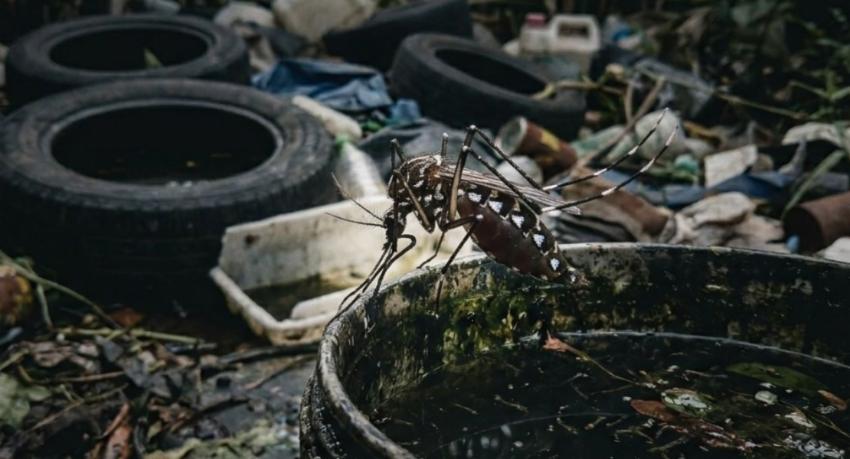
Dr. Kannangara attributed the surge to heavy rainfall associated with Cyclone Ditwah and continuing intermittent showers across the island, the same drivers identified in the 42 high-risk zones flagged in mid-May and the dengue eradication programme launched across 43 divisions in early May. The Friday figure is up from 33,572 cases and 19 deaths reported on June 1.
Update — June 6: NewsFirst reported that NDCU Acting Director Dr. Kapila Kannangara, restating the figures on Friday, placed the year’s cumulative caseload at 35,300 within the past five months. He explicitly attributed the rapid escalation to flooding triggered by Cyclone Ditwah, which has accelerated the proliferation of mosquito breeding sites. Dr. Kannangara also said the NDCU would seek police assistance to inspect abandoned plots of land during the three-day drive — a new operational detail beyond the wider Tri-Forces and Police deployment already announced.
Update — June 6 (afternoon): Health authorities warned on Saturday that hospitals are reaching or exceeding their capacity to accommodate dengue patients amid the rapid rise in infections. Officials told Ada Derana that the Western Province alone now accounts for approximately 50% of all confirmed cases this year, with the highest individual caseloads in Colombo, followed by Gampaha, Ratnapura, Matara, Galle, Kalutara and Kandy districts. The capacity warning is the first formal hospital-strain advisory of the 2026 outbreak and underscores why the June 8–10 islandwide control drive has been pushed forward.
Update — June 7: The NDCU revised the cumulative caseload up to 36,168 cases as of June 5, an increase of between 50% and 55% on the same period in 2025, NDCU Director Dr. Kapila Kannangara told Ada Derana on Sunday. Around 50% of the total has been reported from the Western Province, with significant clusters now also recorded in Matara and Galle in the Southern Province, Ratnapura and Kegalle in Sabaragamuwa, Puttalam district, and Kandy in the Central Province — the first time Puttalam has been formally cited as a hotspot in the 2026 outbreak. Health officials again attributed the surge to wet weather since January and to large quantities of waste accumulated after Cyclone Ditwah creating new mosquito breeding sites. Dr. Kannangara also said future control operations will be carried out more strictly and that legal action will be taken against individuals who obstruct or fail to cooperate with public health inspectors. In a separate Sunday briefing, he placed the upcoming three-day drive at 72 MOH divisions across 14 high-risk districts — a slight downward revision from Friday’s 74-division figure.
Update — June 8 (launch): The NDCU formally launched the three-day programme on Monday across 72 MOH divisions in 12 districts, Ada Derana reported — narrower than the 14-district figure given in last week’s briefings. Cumulative case totals remain at 36,168 as of June 5, with the highest concentration of infections in the Western Province and confirmed cases also reported in Matara, Galle, Ratnapura, Kegalle, Puttalam and Kandy. The death toll was unchanged at 20 for the year, including three children. The 12-district launch footprint covers the same southern, central and Sabaragamuwa hotspots flagged on Sunday.
Update — June 8 (Director briefing): Dr. Kannangara, briefing Ada Derana later on Monday, put the cumulative caseload at “nearly 37,000” — an increase of about 10,000 on the same period of 2025 — and said about half of the cases continued to be reported from the Western Province. Colombo District alone accounted for 22% of all cases, followed by Gampaha (17%) and Kalutara (6%). He said schools, government institutions and places of worship were among the most frequently identified breeding hotspots, and confirmed the three-day drive would cover 14 districts and 72 MOH divisions, with the national programme officially launched from the Colombo Municipal Council premises. Red notices and legal action against premises owners maintaining breeding grounds would follow.
Update — June 8 (CMC launch ceremony): Newswire reported that the official opening ceremony at the Colombo Municipal Council premises was led by Colombo Mayor Vraie Cally Balthazaar alongside CMC Chief Medical Officer Dr. K. Sriprathapan and Dr. Kannangara. Mayor Balthazaar urged public participation and acknowledged support from the Tri-Forces, Police, state institutions and health-sector staff. Dr. Kannangara separately told the ceremony that approximately 2,000 of the year’s cases had been recorded within the Colombo Municipal limits alone, underscoring the city’s status as the country’s hottest dengue cluster.
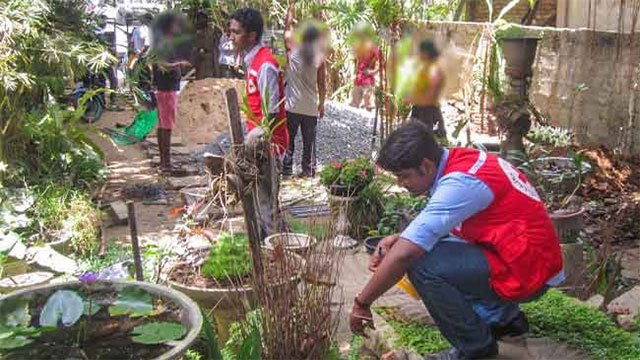
Update — June 8 (Day 1 results): Reviewing first-day progress at the Health Ministry’s Disaster Management Unit, Dr. Kannangara said more than 70,000 premises had been inspected on Monday alone, leading to the detection of a significant number of locations with mosquito larvae and conditions conducive to dengue mosquito breeding, Ada Derana reported. Teams conducted door-to-door inspections of residential, educational and institutional premises across the 14-district footprint, with the Tri-Forces, Police, government institutions, NGOs, community-based organisations, village committees, Public Health Inspectors, Medical Officers of Health and dengue assistants participating. Authorities said legal action had been initiated against several institutions and premises where mosquito larvae were detected during the inspections, marking the first formal enforcement track of the three-day drive.
Update — June 9 (Day 1 detailed breakdown): The NDCU on Tuesday released a detailed breakdown of Monday’s inspections: of 31,196 premises inspected on Day 1, 8,121 were identified as potential dengue mosquito breeding sites and 2,097 were confirmed to have larvae. Field teams issued 1,165 notices and initiated legal action against 789 individuals. Among 189 government institutions inspected, 50 were found with dengue larvae and 70 were flagged as potential breeding sites — the highest larvae-positive rate of any inspected category. Schools showed similarly elevated risk: 56 schools were inspected, 31% identified as potential breeding sites and 7 confirmed with larvae. In the construction sector, 178 premises were inspected, 93 flagged as potential breeding sites and 41 confirmed with larvae, with legal action taken against 24 individuals. Religious places saw 18 of 96 inspected sites with larvae; 17 of 77 factory premises also tested positive. Across 28,230 residential premises, 7,088 were identified as potential breeding sites and 1,760 had larvae, with legal action initiated against 657 households. The detailed enforcement figures mark the first formal disclosure of the programme’s institutional-vs-residential breakdown and underscore the prevalence of mosquito breeding in state-run buildings and construction sites flagged earlier by Dr. Kannangara as priority hotspots.
Update — June 11 (Control Week declared): The NDCU has declared a nationwide Dengue Control Week starting June 15 to intensify efforts against the rising spread of dengue, Ada Derana reported. Community Physician Specialist Dr. Prasheela Samaraweera of the National Dengue Control Unit said the decision was taken in response to the continuing escalation in case numbers islandwide. The week-long programme follows the three-day June 8–10 special mosquito control drive, which identified and eliminated breeding sites across the 14-district footprint. Dr. Samaraweera also said an additional mosquito eradication week is being planned at the local government level to further strengthen prevention and reduce onward transmission, with health authorities urging the public to maintain clean surroundings and eliminate potential mosquito breeding grounds at home.
Sources: Ada Derana — control programme, Ada Derana — case data, NewsFirst — 35,000 cases as post-Ditwah risks rise, Ada Derana — hospital capacity strain, Ada Derana — 36,168 cases up 50-55%, Ada Derana — 14 districts on alert, Ada Derana — June 8 launch across 12 districts, Ada Derana — nearly 37,000 cases CMC launch, Newswire — Three-day national dengue mosquito eradication drive begins, Ada Derana — Over 70,000 premises inspected on first day of National Dengue Control Drive, Ada Derana — National Dengue Control Week to commence June 15.