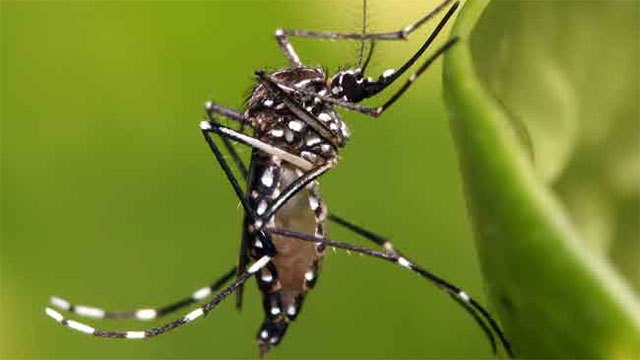
Sri Lanka’s National Dengue Control Unit has identified Aedes aegypti as the principal mosquito species responsible for dengue transmission, warning that its distinctive feeding pattern significantly increases the speed at which the virus can spread through a community.
Entomologist Sakunthala Janaki told reporters that dengue in Sri Lanka is transmitted by only two mosquito species — Aedes aegypti and Aedes albopictus — but that Aedes aegypti has been the dominant vector for years. Increases in Aedes aegypti populations have consistently been observed in the weeks preceding major dengue outbreaks, she said.
The species’ threat profile rests on a behaviour unusual among female mosquitoes. Most females take a single blood meal from one host to complete each reproductive cycle. Aedes aegypti, by contrast, often performs “multiple feeding” — biting several people in succession to obtain the blood it needs. The behaviour is particularly evident in places where small groups of people gather, allowing a single mosquito to access multiple hosts in a short window.
A single infected Aedes aegypti can therefore transmit the dengue virus to several individuals in close sequence, accelerating outbreaks beyond what would be possible with a single-host vector. The Unit said continuous monitoring and source-reduction targeting Aedes aegypti populations must therefore remain at the centre of national dengue control.
The vector warning comes as confirmed cases for 2026 topped 42,232 with 24 deaths reported through June 14 — and as Sri Lanka entered the Special Dengue Prevention Week from June 15, with structured island-wide source-reduction operations in public spaces, schools, institutions and residences. The Health Ministry has also flagged a modified dengue strain circulating this season that a larger share of the population has no prior immunity against, compounding the vector-driven transmission risk.
Update — June 18: Special schools control programme underway; 42,807 cases YTD
Special dengue prevention activities are running today across all schools, pre-schools and private educational institutions as the next phase of the Special Dengue Prevention Week launched on June 15, the Ministry of Education said, with focus on eliminating mosquito breeding sites on school premises, Ada Derana reported. The National Dengue Control Unit confirmed that schools have been among the most frequently identified breeding locations during programmes conducted to date, with Community Physician Specialist Prasheela Samaraweera saying legal action has now been taken against more than 2,000 premises identified as potential breeding sites, NewsFirst reported. Confirmed 2026 cases have reached 42,807 — adding 575 cases since the June 14 update — underscoring the urgency of the school-week intervention.