India could be heading into a weaker-than-usual monsoon season this year, raising concerns about inflation and the broader economy with second-order implications for Sri Lanka’s food import and price outlook.
The India Meteorological Department (IMD) has forecast below-average rainfall for the June to September monsoon period — the first such outlook in three years. Rainfall is expected to be about 92 per cent of the long-term average, making it the lowest initial monsoon forecast in more than two decades.
One of the main drivers behind the weaker outlook is El Niño, a climate pattern linked to the warming of surface waters in the tropical Pacific Ocean that typically weakens India’s southwest monsoon. The same climate signal underpins Sri Lanka’s own Met Department drought warning and southwest monsoon advisory.
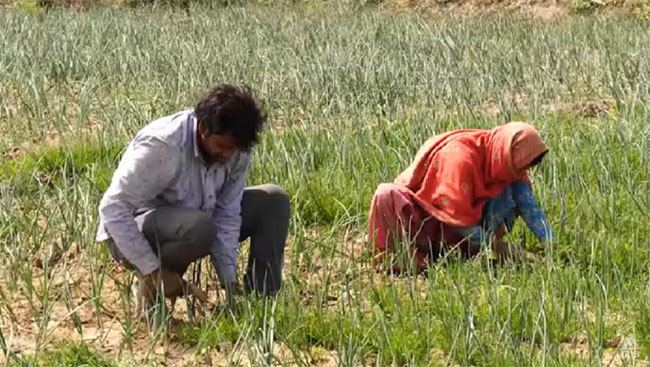
The monsoon delivers nearly 70 per cent of India’s annual rainfall and is vital for agriculture, reservoirs and groundwater replenishment. About half of India’s population depends on agriculture for their livelihoods.
“The kind of monsoon India gets is very important. It impacts not just the agriculture sector, but it also has a bearing on overall consumption spending in the economy and hence overall GDP growth,” said Rajani Sinha, chief economist at CareEdge Ratings. “It also impacts inflation, specifically food inflation, and overall rural sentiment and rural spending.”
The warning comes amid ongoing conflict in the Middle East that has raised concerns about energy supply disruptions, while the Indian rupee has come under pressure from geopolitical uncertainty.
Official data shows food inflation rose to nearly 3.9 per cent in March, up from 3.5 per cent in February. CareEdge had projected India’s FY27 growth at 7.2 per cent before the Iran war, then cut it to 6.7 per cent on higher oil prices, and warned a poor monsoon could pull GDP growth to around 6.5 per cent.
For Sri Lanka, which imports rice, lentils, sugar and onions from Indian markets and runs its own reservoirs below 60% capacity, a weaker Indian monsoon raises the risk of higher food import prices through 2026.