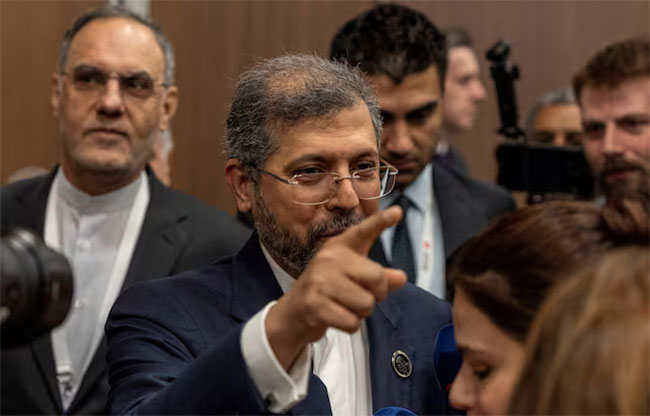
Iran has pushed back against expectations of an imminent second round of nuclear negotiations with the United States, with Deputy Foreign Minister Saeed Khatibzadeh saying Saturday that no date has been set and a “framework of understanding” must be agreed first.
Speaking on the sidelines of a diplomacy forum in Antalya, Turkey, Khatibzadeh said the Islamabad talks — the highest-level direct US-Iran contact since the 1979 Islamic Revolution — saw “significant progress” but ultimately stalled over what he called Washington’s “maximalist approach.”
“We don’t want to enter into any negotiation or meeting which is doomed to fail and which can be a pretext for another round of escalation,” Khatibzadeh told reporters.
He said US demands sought to make Iran “an exception from international law” on nuclear matters — a position Tehran refuses to accept. “Iran would not accept to be an exception from the international law. Anything that we are going to be committed will be within the international regulations,” he stated.
On the Strait of Hormuz, Khatibzadeh explained that Iran had reopened the waterway for commercial vessels following the ceasefire terms, but the US then declared the opening applied to “all ships except Iranian ones.”
“That was the reason we said that if you are going to violate the ceasefire terms and conditions, there will be repercussions,” he said, confirming Iran had reversed the opening.
The statement dampens US President Donald Trump’s suggestion that further direct talks could take place as soon as this weekend, with diplomats telling Reuters the logistics of convening in Islamabad make that timeline unlikely.
The impasse leaves the broader ceasefire framework fragile and global oil markets on edge, with Sri Lanka’s fuel supply outlook remaining uncertain as Hormuz transit risks persist.