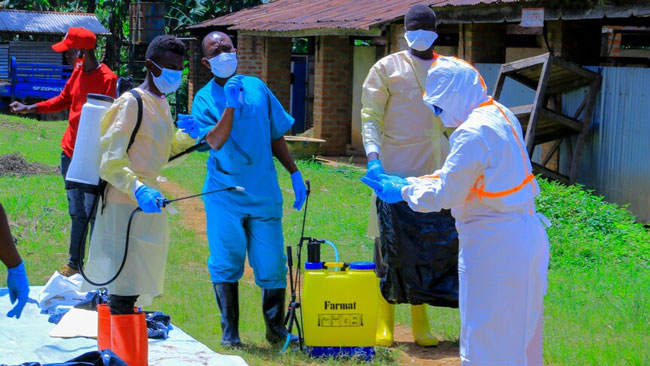
The rapid spread of Ebola in the Democratic Republic of Congo has created a “deeply alarming” situation, Médecins Sans Frontières warned on Saturday, as the head of the World Health Organization arrived in the worst-hit Ituri province to oversee containment.
There are now more than 1,000 suspected Ebola cases in DR Congo and at least 246 deaths, the BBC reported. Neighbouring Uganda has confirmed nine cases and one death.
“Two weeks after the declaration of the Ebola disease outbreak in Ituri Province, the situation is deeply alarming,” MSF deputy director Dr Alan Gonzalez said in a statement carried by Ada Derana. “Never before has an Ebola outbreak recorded so many cases so soon after its declaration.”
Gonzalez said MSF teams on the ground were “witnessing a response that has not yet caught up to the rapid spread of the epidemic.” Containment work and humanitarian aid deliveries were being held back by “major constraints” including border and airport closures, while “hundreds of samples remain untested.” “The reality today is that nobody knows the true scale and severity of this outbreak,” he said.
WHO Director-General Tedros Adhanom Ghebreyesus, arriving in Ituri’s provincial capital Bunia on Saturday, said his team was in DR Congo “to see how the response is running and if there are challenges to help.” He urged communities at the centre of the outbreak to take a bigger role in fighting the disease and warned that touching the bodies of the dead at funerals “can spread the virus further.”
The outbreak is the rare Bundibugyo strain of Ebola, for which the WHO has said no licensed vaccine is available and any new one would take nine months. Saturday’s update is a sharp escalation from the 220 deaths Tedros reported on 25 May and from the 139 deaths counted a week earlier, when an angry crowd burned isolation tents at a hospital near Bunia. Sri Lanka has maintained a five-point preparedness plan since the WHO declared a public health emergency of international concern on 17 May.
Speaking in Bunia, Tedros separately urged countries that have imposed travel bans or border closures in response to the outbreak to reconsider them, warning the measures hamper the international response and erode the trust and transparency that “saves lives,” Ada Derana reported. He said cooperation between communities, health authorities and neighbouring countries was critical to preventing further spread.
Sources: Ada Derana — MSF “deeply alarming”; BBC; Ada Derana — WHO urges reconsidering travel bans.