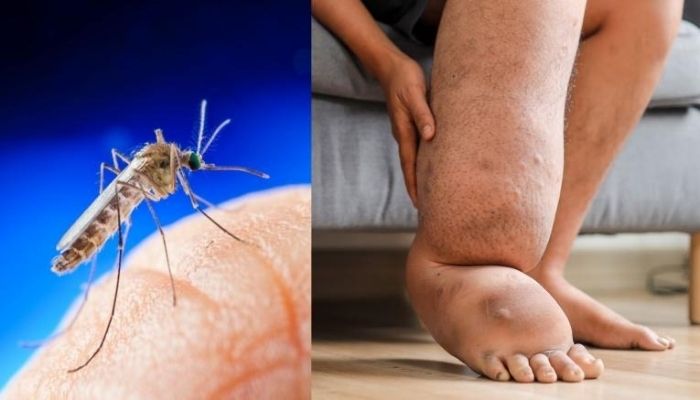
Sri Lanka recorded 68 cases of filariasis during 2025, with half the infections detected among foreign workers who had arrived from India, the Anti Filariasis Campaign said on Wednesday.
Anti Filariasis Campaign Director Dr Prasanga Serasinghe said 34 local patients and 34 Indian nationals employed in Sri Lanka were diagnosed with the mosquito-borne parasitic disease during the year.
The campaign said cases continue to be reported mainly from seven districts: Hambantota, Galle, Matara, Kalutara, Gampaha, Colombo and Kurunegala — a band of low-country coastal and suburban districts where the mosquito vector remains active.
Dr Serasinghe added that Sri Lanka is targeting the complete elimination of filariasis by 2030, with efforts focused on driving locally transmitted infections to zero. He said the disease remains under control through ongoing public health surveillance and monitoring programmes.
Sri Lanka was certified by the World Health Organization in 2016 as having eliminated lymphatic filariasis as a public health problem, but the campaign has continued post-validation surveillance because of the risk of reintroduction through travel and labour migration. The high share of imported cases in 2025 reinforces calls for occupational-health screening of migrant workers, particularly those coming from areas where filariasis is endemic.
The 2025 figures will be read alongside current dengue and infectious-disease reporting, which has seen more than 27,000 dengue cases and 14 deaths so far this year and a recent Deniyaya influenza cluster forcing four schools to close, signalling the broader vector- and respiratory-borne disease pressure ahead of the south-west monsoon.