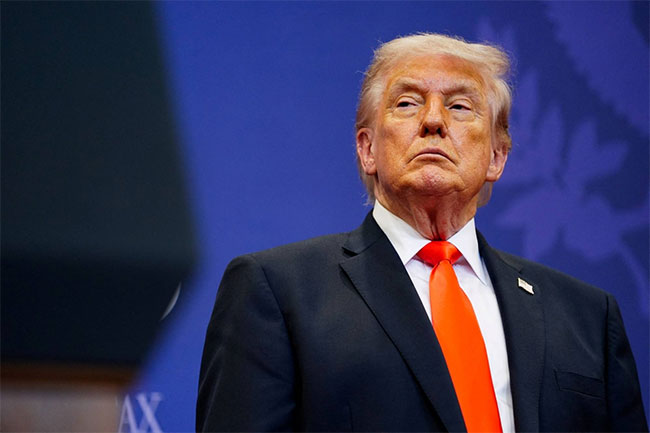
US President Donald Trump on Friday rejected Iran’s latest negotiating proposal on the two-month-old Iran war, while the United States announced it was withdrawing 5,000 troops from Germany following sharp criticism from Berlin over Washington’s handling of the conflict.
“They want to make a deal, but … I’m not satisfied with it,” Trump told reporters at the White House, describing the Iranian leadership as “very disjointed” and split into “two or three groups.” He said negotiations were continuing by phone but added: “They’re asking for things that I can’t agree to.”
The German troop drawdown was triggered by remarks earlier in the week from Chancellor Friedrich Merz, who said Iran was “humiliating” the United States and that Washington lacked an exit strategy. A senior Pentagon official, speaking on condition of anonymity, described Berlin’s statements as “inappropriate and unhelpful,” saying Trump was “rightly reacting to these counterproductive remarks.”
Iran’s Foreign Minister Abbas Araqchi said Tehran was ready to pursue diplomacy if the United States changed what he called its “excessive approach, threatening rhetoric and provocative actions.” Two senior Iranian sources told Reuters that Iran had activated air defences and prepared a wide response, anticipating a short, intensive US strike possibly followed by an Israeli attack.
Trump told congressional leaders he did not need their permission to extend the war beyond a Friday deadline set by law because the April 8 ceasefire had “terminated” hostilities. As of Friday afternoon, the US Navy had stopped 45 commercial vessels under its blockade of Iranian crude oil exports, the US military said.
Brent crude eased about 1% to roughly $109 a barrel after the Iranian proposal, coming off Thursday’s four-year high. The continued closure of the Strait of Hormuz, which carries about 20% of the world’s oil and gas, is the main pressure on Sri Lanka’s Ceylon Petroleum Corporation fuel costs and on rising domestic inflation.
China’s UN ambassador Fu Cong said the strait must be reopened “as quickly as possible” and would be high on the agenda when President Xi Jinping meets Trump in Beijing later this month.
Source: Ada Derana (citing Reuters).