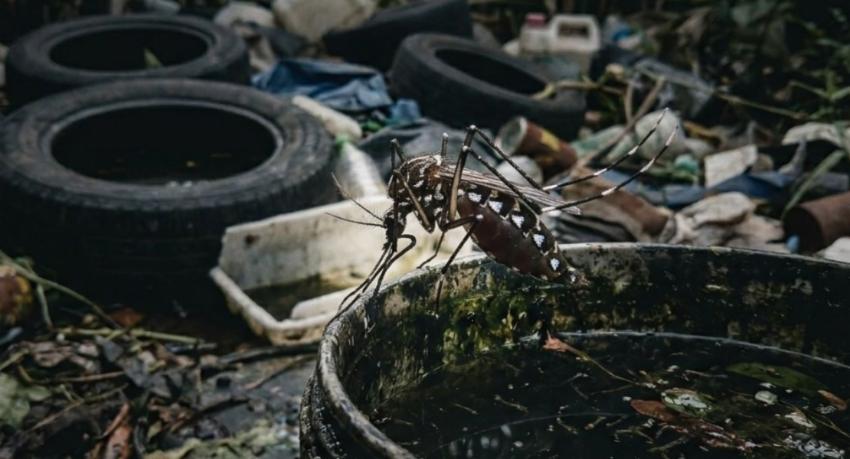
Sri Lanka has recorded 98,427 dengue cases so far in 2026 and 74 dengue-related deaths, NewsFirst reported, citing figures from the National Dengue Control Unit.
2,758 cases were reported in the first 17 days of September.
Dr. Kapila Kannangara, Acting Director of the National Dengue Control Unit, said mosquito control programmes are running in 62 Medical Officer of Health divisions where dengue larvae are prevalent.
What the numbers show
September is running at roughly 162 cases a day — 2,758 over 17 days. That is about half of August’s rate, which produced 10,157 cases in the month, or 328 a day, and barely a fifth of July’s 29,964.
The figures also reconcile cleanly against that August total. The year stood at 95,493 at the end of August; adding September’s 2,758 gives 98,251 through 17 September, and the reported year-to-date of 98,427 implies a further 176 cases on 18 September — consistent with the running daily rate.
The death toll has risen by two since the end of August, when it stood at 72.
On the current pace, the 100,000 mark falls around the end of September: 1,573 cases remain, which is roughly ten days at 162 a day.
The wider picture
The decline since July is substantial but the annual total is already among the country’s higher years, and the epidemic has been running hot all season — cases passed 41,144 in mid-June and 75,000 by mid-July, at which point schools were flagged as breeding sites.
Control work this year has also had to contend with expired dengue test kits in private laboratories, and has been supported by a malathion donation from India.
Not reported
NewsFirst does not identify the 62 MOH divisions, say how they were selected, or give a district breakdown of either cases or deaths. It does not say what the control programmes consist of, how long they will run, or what they cost.
It does not give the comparable 2025 figures, so the reader cannot tell whether 98,427 is above or below the same point last year. Nor does it say why the September rate has halved — whether this reflects the end of the south-west monsoon, the control programmes, or a change in reporting.