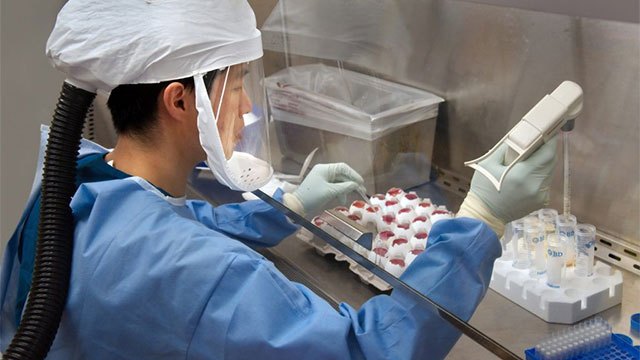
Three separate vaccine programmes are now in development against the rare Bundibugyo species of Ebola, which has killed nearly 250 people and threatens to spiral into the worst Ebola outbreak ever recorded, Ada Derana reported on Monday citing international health and pharmaceutical industry sources.
The International AIDS Vaccine Initiative (IAVI) is leading on a modified version of the existing Zaire Ebola vaccine. The experimental jab has been tested in monkeys, where it rapidly trained the immune system and gave close to 100 percent protection, IAVI head Dr Mark Feinberg said. Feinberg told reporters he was “optimistic about the potential,” but the vaccine would still need seven to nine months to reach clinical trials — a timeline the team is trying to accelerate.
Pharmaceutical company Moderna has separately announced it is using its mRNA technology — the same platform that produced Covid-19 vaccines at speed in 2020 — to develop a Bundibugyo vaccine. “We will move with urgency and scientific rigor to support the response and help bring a potential vaccine closer to the communities that need it most,” Moderna chief executive Stéphane Bancel said. The University of Oxford is also developing its own technology, which should be ready for clinical trials in two to three months according to the report.
Each candidate aims to train the body to recognise the Bundibugyo glycoprotein on the surface of the virus, but using different platforms. IAVI uses a live, harmless virus engineered to display the Ebola glycoprotein; the Moderna and Oxford vaccines deliver a genetic snippet that instructs the body to produce the glycoprotein internally. The Coalition for Epidemic Preparedness Innovations (CEPI), which is funding each of the three groups, said “every day counts.”
The outbreak — first detected only after it had spread in a conflict zone with limited healthcare resources — has now produced more than 1,000 suspected cases in the Democratic Republic of the Congo and nine confirmed cases in neighbouring Uganda. There is growing concern it could approach the scale of the 2014-16 West Africa outbreak, which infected nearly 29,000 people and killed more than 11,000. Médecins Sans Frontières described the situation as “deeply alarming” over the weekend, saying never before had “so many cases” been recorded so soon.
There are six species of Ebola but only three are known to cause outbreaks. A vaccine exists for the most common Zaire species, but Bundibugyo — seen only twice before — has none approved. The new vaccine race builds on the earlier reporting that both initial candidate vaccines were still nine months from clinical trials and follows the WHO’s PHEIC declaration for the outbreak on May 17. Sri Lanka activated a five-point preparedness plan in response to the WHO emergency declaration.