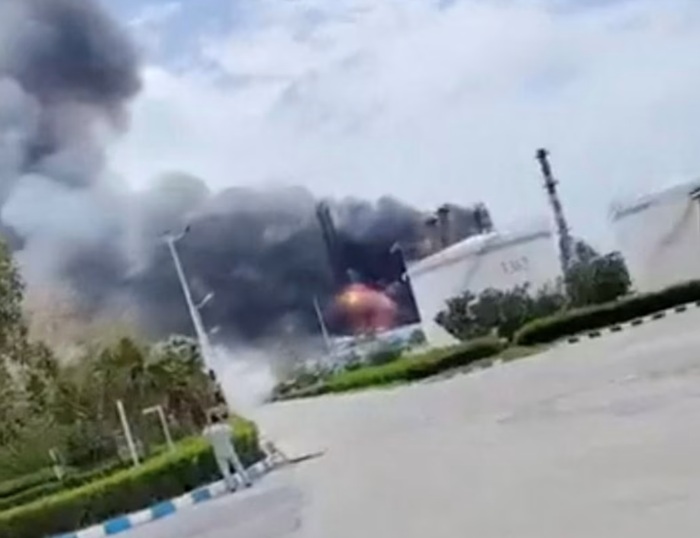
The United Arab Emirates has been secretly carrying out a series of strikes on Iran during the US-Israeli war, including a hit on a refinery on Iran’s Lavan Island that knocked the facility offline in early April, according to a Wall Street Journal report cited by Newswire on Tuesday.
The Lavan Island strike caused a large fire and took the refinery offline around the time US President Donald Trump was preparing to announce a ceasefire with Iran, anonymous sources told the Journal. Iran retaliated with ballistic missiles and drones aimed at the UAE and Kuwait. One source said Washington “quietly welcomed” the Emirates’ entry into the war.
The report reframes the Gulf’s role in the conflict. Iran has targeted the UAE more than any other country in the campaign, the Journal said, launching more than 2,800 missiles and drones at the federation — a higher count than Israel has received. The barrage has prompted layoffs and furloughs, with senior Gulf officials telling the Journal that Iran is now seen as a “rogue actor” threatening the country’s expatriate-led economic model.
“It’s significant to have a Gulf Arab country as a warring party that struck Iran directly,” Middle East analyst Dina Esfandiary told the Journal. “Tehran will now aim to further drive a wedge between the UAE and other Gulf Arabs who are trying to mediate an end to the war.”
The UAE’s Ministry of Foreign Affairs declined to comment on the strikes, the report said, but pointed to a previous statement emphasising Abu Dhabi’s right to respond to hostile acts.
For Sri Lanka, the disclosure complicates the Gulf mediation channels — Oman, Qatar and the UAE have all been part of the diplomatic track — and threatens to extend the conflict that has kept the Strait of Hormuz partially closed for more than two months. Sri Lanka’s fuel premiums, shipping costs and tourism arrivals remain hostage to the Gulf escalation.
The disclosure follows separate confirmed Iranian strikes on the UAE on 4 May, 5 May and 8 May, and the Pakistani-mediated US-Iran peace track that remains stalled.